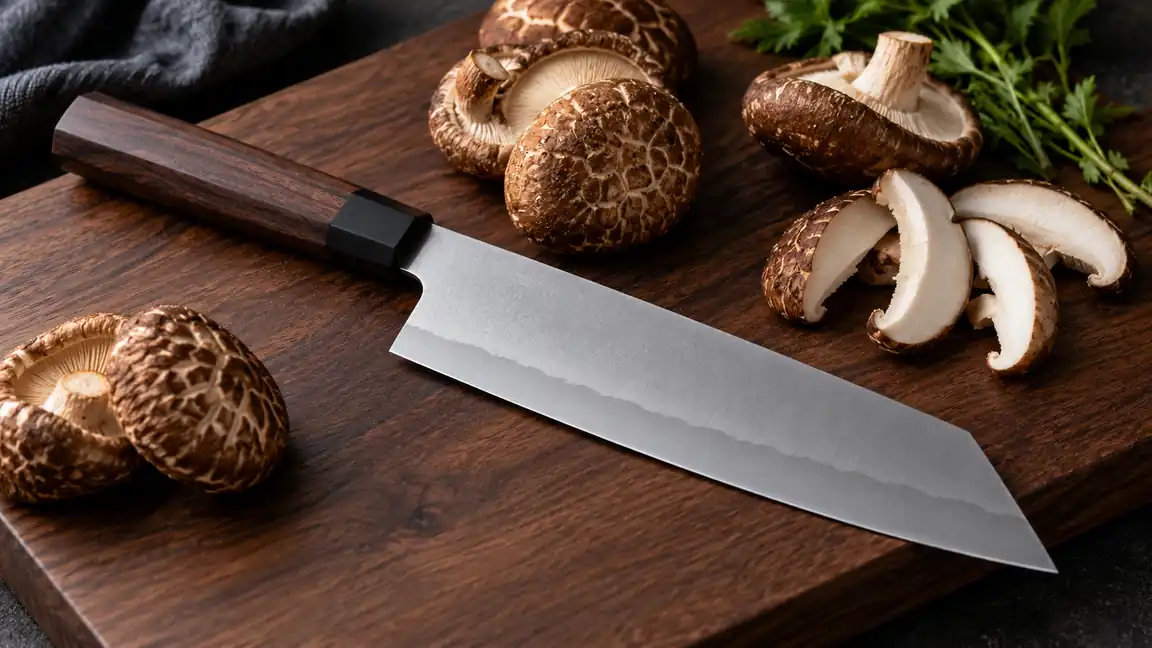
A bunka knife sits between a compact chef’s knife and a precision-oriented Japanese blade. Its relatively flat edge suits push cuts through vegetables, while the angular tip helps with trimming, detail work, and controlled slicing. That combination explains the appeal: a bunka can handle onions, herbs, boneless meat, and fish without the rounded belly of a Western chef’s knife getting in the way.
The shape alone does not determine whether a knife is a good buy. Blade length, steel, edge angle, handle design, and maintenance demands can change the experience considerably. A 6.5-inch bunka may feel nimble on a small cutting board, while a 190 mm model gives more room for larger ingredients. Carbon steel can bring different care requirements from stainless steel, and a thin, hard edge deserves more careful treatment than a general-purpose kitchen knife.
This guide compares nine genuine bunka and closely related bunka-style options from the supplied product selection. The ranking gives priority to documented blade geometry, steel, handle construction, intended kitchen use, and ownership requirements. Some choices suit cooks who want a traditional carbon-steel blade, while others favor stainless maintenance, compact dimensions, or a more decorative handle.
Quick Answer
- YOSHIDAHAMONO Bunka Knife 190mm — Best Overall: A documented Aogami #2 carbon-steel bunka with a reverse tanto tip, double bevel, 162 g weight, and full-tang Keyaki handle.
- MIYABI Mizu SG2 6.5" Bunka Knife — Best Stainless Option: An SG2 stainless bunka with a hammered finish, Micarta handle, and stated 63 HRC hardness.
- Misen 6-Inch Bunka Knife — Best Compact Design: A shorter bunka-style knife with a straight edge, triangular tip, and ACUTO440 high-carbon stainless steel.
- Spyderco Minarai Bunka Bocho — Best Full-Flat Bunka: A 7.75-inch CTS BD1N stainless blade with a thin, straight grind and Carter Elbow tip taper.
Best Bunka Knife Comparison Table
| Product | Best For | Blade Length | Steel | Handle |
|---|---|---|---|---|
| YOSHIDAHAMONO Bunka Knife 190mm | Overall versatility | 190 mm | Aogami #2, HRC 62–64 | Keyaki wood |
| MIYABI Mizu SG2 6.5" Bunka Knife | Stainless precision work | 6.5 in | SG2, HRC 63 | Micarta D-shape |
| MIYABI Kaizen II 6.5-inch Bunka Knife | Thin Japanese profile | 6.5 in | FC61, HRC 61 | Black pakkawood |
| Misen 6-Inch Bunka Knife | Compact prep | 6 in | ACUTO440 stainless | Ergonomic handle |
| MIYABI Birchwood SG2 Bunka Knife | Traditional handle design | 6.5 in | SG2, HRC 63 | Karelian birch |
| MIYABI Artisan 6.5-inch Bunka Knife | Hammered SG2 construction | 6.5 in | SG2, HRC 63 | Cocobolo pakkawood |
| YOTSUBA 8 Inch Damascus Kiritsuke Knife | Long bunka-style cutting | 8 in | 10Cr15MoV, HRC 62 | Natural rosewood |
| Spyderco Minarai Bunka Bocho | Full-flat cutting | 7.75 in | CTS BD1N | Polypropylene |
| SHAN ZU 8 Inch Japanese Chef Knife | Longer bunka-style alternative | 8 in | 10Cr15MoV, HRC 62 | Red sandalwood |
The detailed reviews below explain where each knife fits, including the differences between traditional carbon steel, stainless construction, compact blades, and longer bunka-style alternatives.
1. YOSHIDAHAMONO Bunka Knife 190mm — Best Overall
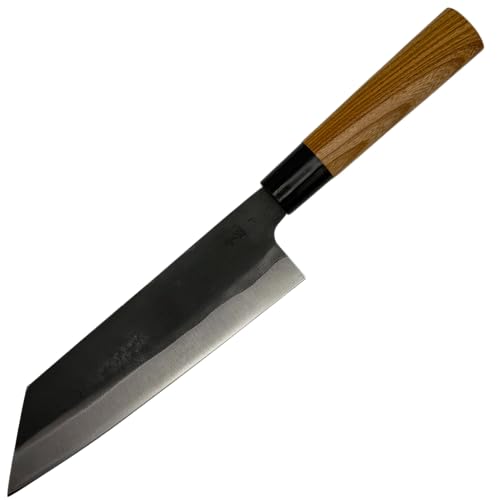
The YOSHIDAHAMONO 190 mm bunka has the most complete documented match for cooks who want the classic bunka idea in a serious all-purpose format. Its Aogami #2 carbon-steel blade is listed at HRC 62–64, with a double-bevel edge and reverse tanto tip. That angular tip gives the knife a useful point for trimming, scoring, and detail cuts, while the flatter edge supports chopping and push-cutting through onions, carrots, herbs, and boneless proteins.
At 162 g, the knife avoids the heavy feel associated with some larger kitchen blades. The full-tang Keyaki wood handle and oval cross-section are practical details, especially for a cook moving between a cutting board and a crowded prep counter. This is a carbon-steel knife, so it asks for hand washing, prompt drying, and occasional food-safe oiling. The supplied information also recommends a whetstone and warns against using a ceramic honing rod on its hard edge. That care routine is the central ownership trade-off.
Pros
- Documented Aogami #2 carbon steel with stated HRC 62–64 hardness.
- 190 mm blade balances compact control with useful ingredient capacity.
- Reverse tanto tip adds precision for trimming and scored cuts.
- Double-bevel design accommodates right- and left-handed cooks.
- Full-tang Keyaki handle and 162 g listed weight support controlled handling.
Cons
- Carbon steel requires hand washing, drying, and periodic oiling.
- The hard edge requires suitable whetstone maintenance and careful use.
This is the strongest pick for a cook who wants one bunka to cover daily vegetable preparation, herbs, fish, and boneless meat. It is less suitable for someone who leaves knives wet beside the sink or prefers a dishwasher-oriented routine. The documented steel, tip, length, weight, and handle construction give it a broader match than the shorter options, provided the owner accepts carbon-steel care.
To buy this product, click here.
2. MIYABI Mizu SG2 6.5" Bunka Knife — Best Stainless Option

The MIYABI Mizu makes a persuasive case for cooks who want a thin, precise bunka without moving to carbon steel. Its SG2 micro-carbide powder stainless steel is listed at HRC 63, and the knife uses a double-bevel edge sharpened through the Honbazuke process to a stated 12 degrees. Those specifications point toward a fine cutting edge suited to detailed vegetable work, slicing, and smaller proteins.
The 6.5-inch format is easier to maneuver on a compact board than a full-size chef knife. Its flat edge and angled tip reflect the bunka profile, while the hammered Tsuchime Damascus finish gives the blade a distinctive surface appearance. The Micarta D-shaped handle, bolster, metal end cap, and mosaic pin create a more structured handle package than the wood-handled alternatives. Buyers should still treat the fine edge with care, especially around hard foods or unsuitable cutting surfaces.
Pros
- SG2 stainless steel offers a lower-maintenance alternative to carbon steel.
- Stated HRC 63 hardness and 12-degree double bevel suit precise cutting.
- Flat edge and angled tip align closely with bunka-style preparation.
- Micarta D-shaped handle provides a defined grip shape.
- Made in Seki, Japan, according to the supplied product information.
Cons
- Its fine edge still calls for careful cutting-board and sharpening habits.
- The 6.5-inch blade gives less reach for large ingredients than a 190 mm model.
The Mizu is a good fit for cooks who prepare vegetables, herbs, and boneless proteins in moderate quantities and want stainless convenience. It suits a kitchen where the knife may be used frequently but carbon-steel patina management would be unwelcome. Choose the YOSHIDAHAMONO for a longer blade and traditional carbon ownership; choose this MIYABI for a stainless bunka format with a more formal handle design.
To buy this product, click here.
3. MIYABI Kaizen II 6.5-inch Bunka Knife — Best for a Thin Japanese Profile

The Kaizen II takes a slightly different construction route from the Mizu. Its FC61 steel core is protected by 48 layers of Damascus steel, and the listed hardness is HRC 61. The product information describes a thin Japanese blade profile and a Honbazuke edge between 9.5 and 12 degrees. For a bunka buyer, those details matter because the knife is aimed at controlled slicing and push-cutting rather than forceful chopping through hard materials.
A 6.5-inch blade can feel at home beside a small cutting board, a row of spice jars, and a handful of vegetables waiting for prep. The black pakkawood D-shaped handle includes a mosaic pin and a thicker, rounded bolster. That combination gives the knife a more substantial grip area than an especially slim traditional handle, although individual hand size and grip preference will still determine comfort. The Damascus cladding contributes visual character, while the documented core steel remains the more relevant cutting specification.
Pros
- FC61 core steel is identified rather than left as a general steel claim.
- 48-layer Damascus construction provides a distinctive layered exterior.
- Stated HRC 61 hardness and 9.5–12-degree edge suit fine prep.
- Thin Japanese blade profile supports controlled slicing and push cuts.
- Rounded bolster and pakkawood D-handle provide a defined grip structure.
Cons
- The 6.5-inch length may feel short beside larger ingredients.
- The fine edge is better suited to careful food preparation than hard-impact work.
This Kaizen II is a sensible choice for someone who values a thin profile and a shaped handle but does not need the carbon-steel routine of the top pick. Its specifications make it particularly appropriate for neat vegetable cuts, herbs, and boneless proteins. Cooks who prefer a more corrosion-resistant routine may favor a stainless model, while buyers drawn to the Damascus appearance should judge the knife by its blade design and steel core rather than the pattern alone.
To buy this product, click here.
4. Misen 6-Inch Bunka Knife — Best Compact Design
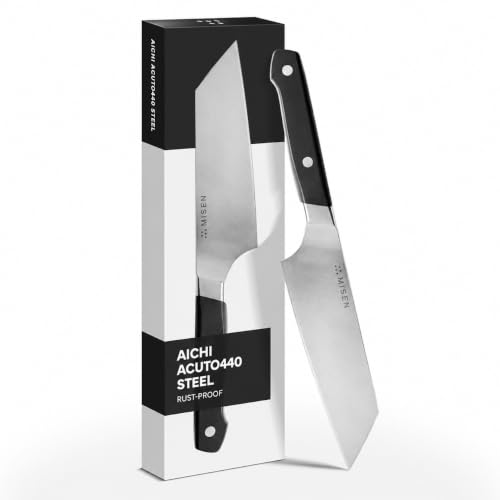
The Misen is the compact choice in this group. Its 6-inch straight-belly blade and triangular tip focus on controlled work close to the board. That size can be useful in a small apartment kitchen, for quick weeknight prep, or for cooks who find longer blades cumbersome around a crowded cutting surface. The tip is suited to mincing and trimming, while the straight edge supports deliberate chopping and slicing.
Its ACUTO440 high-carbon stainless steel is presented as a rust-resistant material, and the listing describes testing related to dishwasher-cycle resistance. That information separates the Misen from the carbon-steel models, though ordinary careful knife care remains sensible. A rounded spine and bolster are intended to support a pinch grip. The shorter blade gives up some reach, yet it may be easier to position for small ingredients and detail work.
Pros
- Compact 6-inch blade suits limited cutting-board space.
- Straight belly supports controlled chopping and push-cutting.
- Triangular tip is useful for mincing and trimming tasks.
- ACUTO440 high-carbon stainless steel offers a rust-resistant construction.
- Rounded spine and bolster accommodate a pinch-grip approach.
Cons
- The short blade provides less clearance and reach for larger ingredients.
- Its specifications are less focused on traditional Japanese carbon-steel construction.
Pick the Misen if compact handling and reduced corrosion concern matter more than a traditional long bunka profile. It makes sense for small kitchens, casual cooks, and anyone who prefers a six-inch blade for routine vegetable work. Larger meal preparation may favor the 190 mm YOSHIDAHAMONO or an eight-inch alternative, while cooks seeking a highly specified Japanese steel may prefer one of the MIYABI models.
To buy this product, click here.
5. MIYABI Birchwood SG2 6.5-inch Bunka Knife — Best Traditional Handle Design

The Birchwood SG2 bunka combines a documented high-hardness stainless core with a traditional-looking handle. Its SG2 micro-carbide powder steel is listed at HRC 63, and the blade receives a three-step Honbazuke edge between 9.5 and 12 degrees. A 101-layer flower Damascus design surrounds the cutting construction, giving the knife a highly decorative appearance without making the pattern itself a substitute for information about the steel.
The Karelian, or Masur, birch handle is the defining ownership detail. It gives this model a warmer visual and tactile direction than the synthetic-handled Mizu, while the rounded spine and heel support the hand during ordinary prep. The 6.5-inch length keeps the knife agile for herbs, vegetables, and boneless proteins. The fine edge still calls for a suitable cutting surface and careful sharpening, particularly because the available information does not establish that the knife is intended for hard-impact tasks.
Pros
- SG2 steel and stated HRC 63 hardness are clearly documented.
- 101-layer flower Damascus design offers a distinctive finish.
- 9.5–12-degree Honbazuke edge suits detailed cutting.
- Karelian birch handle provides a traditional Japanese-style appearance.
- Rounded spine and heel address common hand-contact areas.
Cons
- The decorative handle and layered finish may matter more to some buyers than others.
- The 6.5-inch blade is less suitable for large-volume or oversized ingredients.
This is the pick for a buyer who wants a carefully specified stainless bunka with a traditional handle material and an ornate blade finish. It belongs in a collection where the knife will be hand washed, stored safely, and sharpened with an appropriate method. Choose a simpler model if appearance is secondary, or move to the Mizu for a Micarta handle and hammered finish with a similar blade length.
To buy this product, click here.
6. MIYABI Artisan 6.5-inch Bunka Knife — Best Hammered SG2 Construction

The MIYABI Artisan shares the 6.5-inch bunka format and SG2 material with other knives in this selection, yet its documented combination is distinct. The SG2 core is protected by two layers, the blade receives a katana edge, and the exterior has a hammered Tsuchime finish. The stated HRC 63 hardness and 9.5–12-degree Honbazuke edge place it firmly in the fine-edge Japanese knife category.
Its D-shaped Cocobolo pakkawood handle gives the knife a shaped, polished appearance while avoiding the maintenance questions that can accompany some untreated natural wood handles. The thin Japanese blade profile should appeal to cooks who spend more time slicing vegetables and boneless proteins than breaking down hard ingredients. The hammered surface is visually prominent, but the core steel and edge geometry remain the practical reasons to choose it.
Pros
- SG2 core steel is identified in the supplied product information.
- Stated HRC 63 hardness and narrow Honbazuke edge suit precise prep.
- Hammered Tsuchime finish distinguishes the blade surface.
- Cocobolo pakkawood D-handle offers shaped grip control.
- 6.5-inch thin profile fits detail-oriented kitchen work.
Cons
- The short blade may feel limited for large vegetables and broad slicing tasks.
- The fine edge should not be treated as a general-purpose impact blade.
The Artisan makes sense for cooks who want a visually distinctive bunka with a stainless SG2 core and a defined handle. It is especially suited to a tidy prep station where vegetables, herbs, and boneless proteins are prepared in manageable portions. The Mizu offers a more extensively described Micarta handle, while the Birchwood version changes the handle material and patterned finish, so the final choice is largely about grip style and aesthetics within a similar use category.
To buy this product, click here.
7. YOTSUBA 8 Inch Damascus Kiritsuke Knife — Best Long Bunka-Style Alternative

The YOTSUBA is labeled as a kiritsuke knife with bunka-style positioning in the supplied product data, so it is a related alternative rather than a conventional short bunka. Its eight-inch blade gives more reach for cabbage, larger vegetables, and longer slicing strokes. The listed 10Cr15MoV core is hardened to HRC 62, and the double-sided edge is described at 14 degrees. Those specifications offer a clear basis for comparison with the shorter MIYABI blades.
The 67-ply Damascus construction and hand-hammered texture create a decorative surface, while the natural rosewood octagonal handle follows a traditional Japanese-inspired form. The longer blade can be useful for cooks accustomed to a chef’s knife, but it also demands more board space and careful tip awareness. Buyers seeking the compact, pointed control associated with a six-inch bunka may find this shape less nimble around small ingredients.
Pros
- Eight-inch blade offers useful reach for larger ingredients.
- 10Cr15MoV core and stated HRC 62 hardness are documented.
- Double-sided 14-degree edge supports general kitchen preparation.
- Octagonal rosewood handle provides a traditional grip profile.
- 67-ply Damascus construction gives the blade a pronounced layered finish.
Cons
- Its kiritsuke-style format is less compact than a conventional bunka.
- The longer blade needs more cutting-board space and tip awareness.
Choose the YOTSUBA if you want a bunka-adjacent knife with the reach of a chef’s knife. It is a better match for larger prep sessions than for tiny boards or highly confined detail work. Buyers who specifically want a true compact bunka should select one of the six-inch models, while cooks who prefer a longer blade and traditional octagonal handle may appreciate this broader format.
To buy this product, click here.
8. Spyderco Minarai Bunka Bocho — Best Full-Flat Bunka

The Spyderco Minarai brings a different interpretation of the bunka category. Its 7.75-inch CTS BD1N stainless-steel blade uses a full-flat grind, and the product information describes an exceptionally thin, straight grind with a Carter Elbow taper toward the point. That geometry makes the knife relevant to cooks who want a longer, straight-edged blade for vegetables, meat, and fish rather than a small board knife.
The injection-molded polypropylene handle is more utilitarian than the wood and pakkawood options in this guide. That may appeal to cooks who prioritize straightforward cleaning and a practical material over decorative detailing. The overall listed length is 12.63 inches, giving the knife a substantial footprint. Because the blade is longer than most traditional compact bunkas here, it suits cooks who already favor larger knives and have enough board space to use the point safely.
Pros
- 7.75-inch CTS BD1N stainless blade suits larger preparation tasks.
- Full-flat grind is clearly identified in the product information.
- Straight grind supports controlled vegetable and protein cuts.
- Carter Elbow taper gives the point a documented structural feature.
- Polypropylene handle offers a practical, low-fuss construction.
Cons
- Its longer blade is less compact than most bunka options in this guide.
- Polypropylene lacks the traditional appearance of wood or pakkawood handles.
The Minarai is the better choice for cooks who want bunka styling with a larger blade and modern stainless construction. It may suit a busy household prep station where a plain, cleanable handle is useful. Cooks seeking a traditional Japanese handle, a specified hard powder steel, or a small blade should look elsewhere, since those priorities point toward the MIYABI or YOSHIDAHAMONO choices.
To buy this product, click here.
9. SHAN ZU 8 Inch Japanese Chef Knife — Best Longer Japanese-Style Alternative

The SHAN ZU is described as a Japanese chef knife with kiritsuke and sashimi-oriented language rather than a narrowly specified bunka. It earns a place as a related alternative because its pointed, Japanese-style profile and eight-inch length may appeal to shoppers who want more reach than a compact bunka provides. The listed 10Cr15MoV core is hardened to HRC 62, with a 12-degree edge and nine-layer construction.
An octagonal red sandalwood handle gives the knife a traditional visual direction, while the matte blade finish is intended to reduce visible fingerprints and residue. The extra length can help with larger vegetables and longer slicing motions, though it may feel less precise on a small board. Its classification matters: buyers seeking the distinctive compact bunka silhouette should favor the exact bunka models above, while those who want a longer Japanese-style all-purpose blade may find this a closer functional match.
Pros
- Eight-inch length provides more reach than compact bunka models.
- 10Cr15MoV core and stated HRC 62 hardness are documented.
- Listed 12-degree edge suits detailed slicing and chopping.
- Octagonal red sandalwood handle follows a traditional grip shape.
- Matte blade finish can reduce the visibility of fingerprints and residue.
Cons
- It is a Japanese chef and kiritsuke-style alternative rather than a narrowly defined bunka.
- The longer profile is less convenient for small cutting boards.
This knife is for the shopper whose search began with bunka geometry but expanded toward a longer, pointed Japanese-style chef knife. It can cover broad vegetable preparation and boneless proteins, yet it should not be confused with the shorter, more compact choices. The YOSHIDAHAMONO offers a more direct bunka match, while this SHAN ZU favors reach, a long blade, and an octagonal wood handle.
To buy this product, click here.
Buying Guide
Match the Blade Length to Your Board
Most bunka shoppers are choosing between compact control and useful reach. A 6-inch or 6.5-inch blade works well beside a small cutting board, where a pointed tip can trim scallions or separate small pieces without crowding the work area. A 190 mm or eight-inch blade gives more room for cabbage, large onions, and longer slices, though it needs a wider board and more awareness around the tip.
Look at the Edge and Tip Together
A bunka’s appeal comes from the relationship between its relatively flat edge and angular tip. The flatter section favors push-cutting and chopping, while the point handles detail work. Product descriptions vary, so check whether the knife is presented as a true bunka, bunka bocho, or a related kiritsuke-style knife. The YOTSUBA and SHAN ZU are longer alternatives, while the Misen, MIYABI, and YOSHIDAHAMONO models align more directly with compact bunka use.
Choose Steel Based on Maintenance
The YOSHIDAHAMONO uses documented Aogami #2 carbon steel and requires prompt drying and periodic oiling. The MIYABI models use stainless or stainless-associated constructions, which may be more convenient for cooks who want less patina management. Stainless steel still benefits from proper cleaning and drying, and no supplied information should be read as permission to treat a fine Japanese edge carelessly.
Do Not Treat Hardness as the Whole Performance Story
Several knives list hardness values from HRC 61 to 64, but hardness alone does not establish cutting performance or toughness. Blade profile, grind, edge preparation, heat treatment, and maintenance also matter. A hard, fine edge can be excellent for vegetables and boneless proteins while remaining inappropriate for frozen food, hard bones, or forceful impact.
Compare Handle Materials and Shapes
Wood, pakkawood, Micarta, polypropylene, and natural rosewood create different ownership priorities. The Keyaki and birch handles emphasize traditional materials, while Micarta and pakkawood offer a more manufactured construction. The Spyderco’s polypropylene handle is practical and plain. D-shaped and octagonal handles can guide the hand differently, so shoppers should consider whether they prefer a defined orientation or a more symmetrical grip.
Plan for Appropriate Sharpening
Fine-edged bunkas need a sharpening method that suits their edge geometry and steel. The YOSHIDAHAMONO listing specifically recommends a whetstone and warns against a ceramic honing rod. A sharpening angle stated by a listing should not be treated as a universal rule for every stone or sharpening device. Use a stable cutting board, avoid twisting the edge through hard foods, and store the knife where the edge cannot contact other utensils.
Confirm the actual bevel and maker’s instructions before maintenance; sharpening a Japanese-style knife requires more information than the blade’s name.
Best Bunka Knife FAQ
What Is a Bunka Knife Used For?
A bunka is a Japanese-style all-purpose kitchen knife suited to vegetables, herbs, boneless meat, and fish. Its relatively flat edge supports push cuts and chopping, while the angular tip helps with trimming and detail work. It is a general kitchen knife, not a substitute for a boning knife, cleaver, or single-purpose fish knife.
The angular tip identifies a profile, not a universal specification. The overview of Japanese knife types and their uses places the bunka alongside other multipurpose shapes.
Is a Bunka the Same as a Santoku?
They overlap in everyday use, but their tip designs differ. A santoku usually has a rounded or gently angled tip, while a bunka commonly has a more pronounced angular tip. That point gives the bunka a stronger identity for detail cuts and trimming, although exact geometry varies by product.
Should I Choose a 6.5-Inch or 190 mm Bunka?
Choose a 6.5-inch knife for compact work areas, smaller ingredients, and close control. A 190 mm blade offers more reach and capacity for larger vegetables or bigger preparation sessions. The right length depends on your cutting board, hand control, storage space, and typical ingredient size.
Are Carbon-Steel Bunkas Difficult to Maintain?
They require more routine care than many stainless models. The YOSHIDAHAMONO listing recommends hand washing, drying, and occasional food-safe oiling, and describes a blue-gray patina developing over time. That routine is manageable for an attentive owner, but stainless steel may be a better fit for anyone who regularly leaves knives wet or wants a lower-maintenance option.
Can I Use a Bunka to Cut Bones or Frozen Food?
The supplied product information does not support using these fine-edged bunkas for hard bones or frozen food. Their documented profiles and fine edges are aimed at ordinary kitchen preparation such as vegetables, herbs, fish, and boneless proteins. Use a knife specifically intended for hard materials when that task calls for it.
Are Damascus Bunkas Automatically Better?
No. Damascus or layered construction primarily describes the blade’s exterior or cladding unless the product also identifies a particular core steel. The MIYABI models provide useful steel and hardness information alongside their patterned finishes. Compare the core, geometry, handle, edge, and maintenance requirements rather than judging the knife by layer count alone.
Do Left-Handed Cooks Need a Special Bunka?
A double-bevel bunka can generally be used by right- and left-handed cooks. The YOSHIDAHAMONO product is specifically described as ambidextrous with a double bevel. Handle shapes still influence grip preference, so left-handed buyers should review the handle design rather than focusing on the blade alone.
Final Verdict
The YOSHIDAHAMONO 190 mm Bunka Knife is the strongest overall match for Best Bunka Knife because its documented length, reverse tanto tip, double bevel, Aogami #2 steel, 162 g weight, and full-tang Keyaki handle combine into a focused yet versatile package. It is the pick for cooks who want a traditional carbon-steel bunka and are willing to wash, dry, oil, and sharpen it appropriately.
For stainless convenience, the MIYABI Mizu SG2 is the clearest alternative, while the Misen is the better compact choice for smaller boards and shorter prep sessions. The MIYABI Birchwood and Artisan models appeal to buyers who place greater emphasis on handle materials and decorative finishes, and the Spyderco suits shoppers who want a longer full-flat bunka bocho. Choose the YOTSUBA or SHAN ZU only if you specifically want a longer kiritsuke-style alternative rather than the compact bunka shape.
