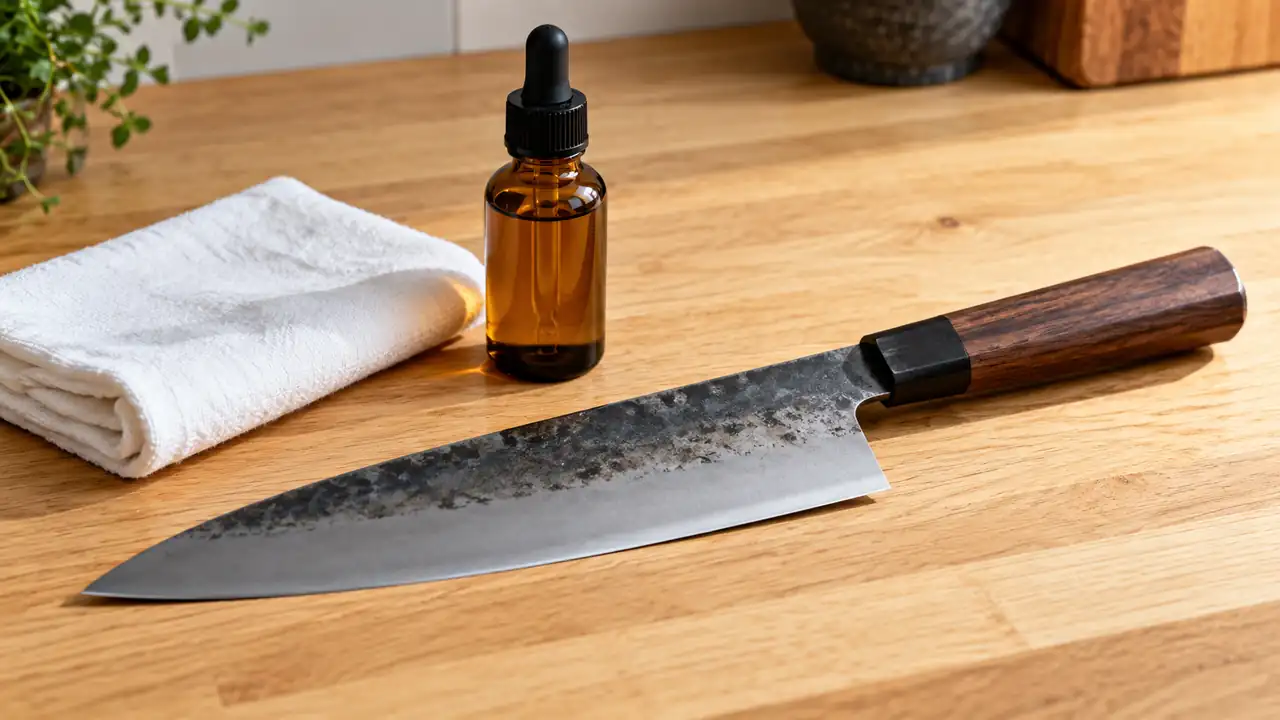
A carbon-steel kitchen knife can go from bright and clean to spotted with orange corrosion after one damp evening in a drawer. That is why cooks look for the best kitchen knife oil, especially when maintaining Japanese carbon-steel blades, restoring older cutlery, or storing knives in a humid kitchen. The right oil leaves a light protective film without adding an unwanted smell or taste to food-contact surfaces.
The main mistake is treating every lubricant as interchangeable. A food-contact-safe blade oil suits a kitchen knife, while a pivot lubricant is intended for folding mechanisms, and sharpening-stone oil belongs on compatible oil stones rather than waterstones. Bottle size, application method, rust-removal accessories, and the difference between carbon steel and stainless steel all affect the practical choice. A busy home cook may want a simple camellia oil, while someone caring for several knives may prefer a larger bottle or a complete rust-care kit.
This comparison focuses on the supplied product information and ranks oils according to kitchen-blade relevance, food-contact suitability as described by the listings, application convenience, and maintenance versatility. The Yoshihiro care kit earns the top spot for buyers who want oil plus a cloth and rust eraser, while several straightforward blade oils make sense for routine prevention without extra accessories.
Quick Answer
- Best Overall: The Yoshihiro Camellia Knife Oil Care Kit combines camellia oil with a rust eraser, microfiber cloth, and travel pouch, giving carbon-steel knife owners a practical maintenance setup.
- Best Traditional Camellia Oil: KUROBARA 100% Pure Tsubaki Oil is a straightforward Japanese-made option for buyers who want a dedicated protective oil in a compact bottle.
- Best Rust-Care Kit: PuGez adds a large rust eraser and lint-free cloth to a food-grade blend of mineral and camellia oils, making it useful for knives that already show surface rust.
Best Kitchen Knife Oil Comparison Table
| Product | Best For | Oil Type or Blend | Included Accessories |
|---|---|---|---|
| Yoshihiro Camellia Knife Oil Care Kit | Complete carbon-steel maintenance | Camellia oil | Rust eraser, cloth, pouch |
| KUROBARA Pure Tsubaki Oil, 3.4 oz | Compact routine care | Pure camellia oil | None listed |
| PuGez Knife Oil Rust Eraser Kit | Rusty or neglected blades | Mineral and camellia oils | Rust eraser, cloth |
| WALRUS OIL Blade and Handle Oil | Blades and wooden handles | Coconut oil and carnauba wax blend | None listed |
| UniKitchen Premium Knife Blade Oil | General blade maintenance | Natural food-safe formula | None listed |
| KUROBARA Pure Tsubaki Oil, 8.3 oz | Larger knife collections | Pure camellia oil | Dispenser bottle |
| Thirteen Chefs Knife and Honing Oil | Carbon-steel knives and sharpening use | Food-safe honing oil | None listed |
| Kate Naturals Food-Grade Mineral Oil | Board and stainless-blade care | Mineral oil | None listed |
| Norton Knife Sharpener Stone Oil | Oil-stone users | Mineral sharpening-stone oil | None listed |
The detailed reviews below separate dedicated blade oils from broader kitchen-care and sharpening products, so you can match the bottle to the maintenance job.
1. Yoshihiro 100% Pure Tsubaki Camellia Knife Oil Care Kit — Best Overall

The Yoshihiro kit earns the leading position because it addresses the full care routine rather than supplying oil alone. Its camellia oil is listed as food safe and intended for high-carbon steel blades, where a thin barrier can help limit contact with moisture between uses. The supplied guidance recommends a drop on each side of the blade, followed by an even wipe with the cloth. That small-dose approach suits cooks who want controlled application instead of a heavily coated knife.
A rust eraser adds practical value for a blade with light surface spotting, while the microfiber cloth supports wiping and polishing. The travel pouch is a useful extra for knife owners who transport a Japanese-style blade to a cooking class, second kitchen, or sharpening appointment. The eraser still requires a gentle touch and should be reserved for rust or stains, since aggressive rubbing can mark a finished blade.
Pros
- Includes camellia oil, a rust eraser, cloth, and travel pouch.
- Listed as food safe for knives that contact food.
- Designed for high-carbon steel blade care.
- Small-drop application helps limit excess oil.
- Addresses both routine protection and light surface rust.
Cons
- The rust eraser requires careful, localized use.
- The kit may include more accessories than owners of clean stainless blades need.
This is the strongest fit for a carbon-steel knife owner who wants one compact kit for wiping, protecting, and dealing with occasional stains. A cook who already owns a suitable cloth and rust eraser could choose a plain camellia oil instead, while someone with several blades may prefer a larger bottle. For a first maintenance purchase, though, the complete arrangement keeps the process tidy and easy to understand.
To buy this product, click here.
2. KUROBARA 100% Pure Tsubaki Japanese Knife Maintenance Camellia Oil — Best Traditional Camellia Oil
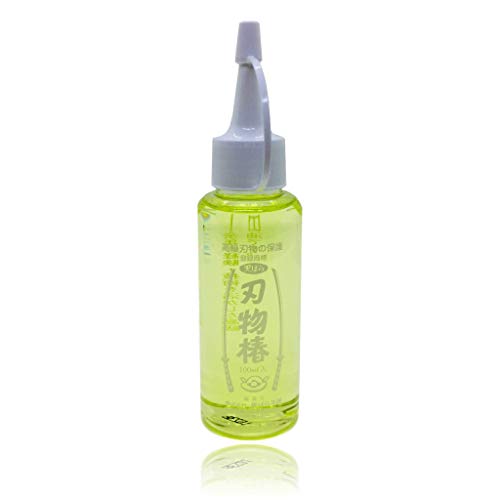
KUROBARA’s compact bottle is a focused choice for cooks who want pure tsubaki, or camellia, oil without a bundle of maintenance tools. The listing describes it as suitable for preventing rust on carbon-steel knives and other metal products. Application is simple: clean and completely dry the cutlery, place an appropriate amount on a cloth, and wipe the blade. That routine fits the quick end-of-day care many carbon-steel owners need after slicing acidic produce or washing a knife.
Made in Japan and supplied in a 100 ml format, this bottle is easier to store beside a sharpening kit than a large workshop container. It can also be used as a lubricant for machinery and tools, although kitchen use should remain the priority if the same cloth touches food-preparation equipment. The absence of a rust eraser means this is a prevention-first product, not a complete solution for an already neglected blade.
Pros
- Pure camellia oil intended for carbon-steel protection.
- Made in Japan according to the supplied product information.
- Compact size suits small kitchens and occasional use.
- Simple cloth-based application requires no special dispenser.
- Also listed for use on scissors and other metal tools.
Cons
- No rust eraser or cloth is listed as included.
- Prevention is its clearest role, so existing corrosion needs separate treatment.
Choose this bottle if your knife is cleaned promptly and you mainly need a light protective coat before storage. It is less convenient for a collection that consumes oil regularly, where the larger KUROBARA dispenser offers more volume. Its appeal is restraint: one traditional oil, one cloth, and a short maintenance ritual.
To buy this product, click here.
3. PuGez Knife Oil Rust Eraser Kit — Best for Rusty Blades
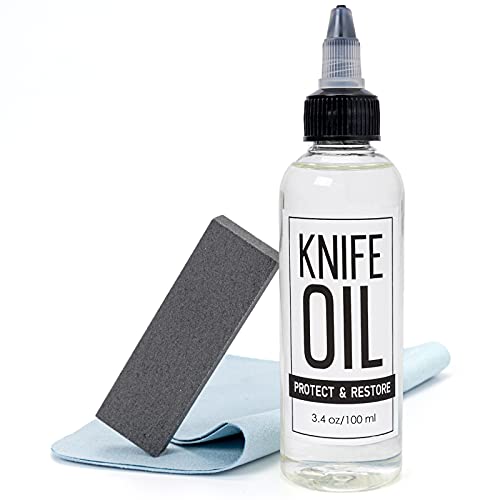
PuGez is aimed at the knife owner staring at small rust marks rather than starting with a spotless blade. The kit pairs a food-grade blend of refined mineral oil and organic camellia oil with a large rust eraser measuring 3 by 1 by 0.5 inches, plus a lint-free cloth. The low-viscosity, odorless, tasteless description makes the oil suitable for a kitchen maintenance routine, provided the blade is cleaned and dried before application.
The large eraser is the key distinction. It can address surface rust and residue on blades or metal utensils, while the oil creates a protective barrier afterward. A cook restoring a carbon-steel knife found in a damp drawer gets a more complete starting point than with a bottle alone. The trade-off is that rust removal requires patience and controlled pressure, and the kit is broader than necessary for someone who only wants routine corrosion prevention.
Pros
- Combines oil, rust eraser, and lint-free cloth.
- Uses a listed blend of mineral and camellia oils.
- Oil is described as odorless, tasteless, and low viscosity.
- Large eraser is suited to surface rust and residue.
- Works across kitchen knives and several other metal tools.
Cons
- Rust removal adds an extra step to ordinary blade care.
- The product listing does not specify an oil volume beyond the product title’s 3.4-ounce description.
PuGez makes the most sense for a carbon-steel knife with visible surface spotting or for a household that wants a small care station. Owners of clean stainless knives may find the rust eraser unnecessary, while collectors should still inspect each blade finish before rubbing. Used thoughtfully, the kit brings restoration and prevention together in one package.
To buy this product, click here.
4. WALRUS OIL Knife Blade and Wooden Handle Oil — Best for Blades and Handles

WALRUS OIL takes a broader approach by addressing both the metal blade and a wooden handle. Its listed formula uses fractionated coconut oil for lubrication and rust prevention, along with carnauba wax. The product information describes the ingredients as food-contact safe and positions the oil for kitchen knives, pocket knives, cutting tools, and wood-carving knives. That combination suits a carbon-steel kitchen knife fitted with a wood handle that needs attention on both surfaces.
The wax component suggests a more protective, conditioning-oriented routine than a plain liquid oil, though the supplied information does not provide a measured film thickness or drying time. It is also described as useful for restoring weathered handles and protecting equipment during outdoor use. A home cook who occasionally maintains wooden-handled tools may appreciate that range, while someone seeking the simplest possible blade wipe may prefer pure camellia oil.
Pros
- Listed as made with food-contact-safe ingredients.
- Intended for both knife blades and wooden handles.
- Combines fractionated coconut oil with carnauba wax.
- Suitable for kitchen knives and broader tool care.
- Useful for weathered handle and blade maintenance.
Cons
- The wax blend may be more involved than a plain blade oil for quick wiping.
- No rust-removal accessory is listed.
This is a sensible pick for cooks who own wooden-handled carbon-steel knives or maintain several wood-and-metal tools around the home. It may be excessive for a stainless knife with a synthetic handle, where the handle-conditioning benefit has less relevance. Buyers should still apply a thin coat and wipe away excess from food-contact surfaces.
To buy this product, click here.
5. UniKitchen Premium Knife Blade Oil and Honing Oil — Best General-Purpose Bottle
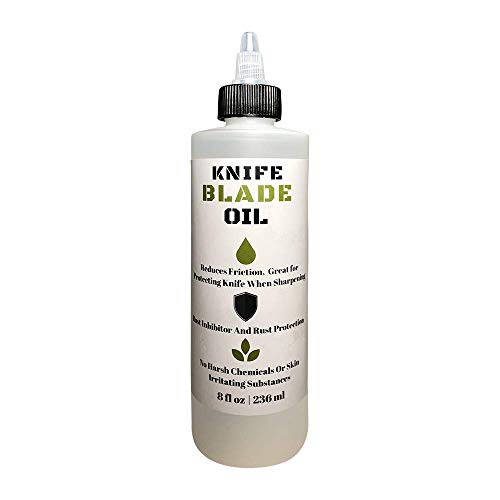
UniKitchen offers a larger bottle aimed at routine protection across kitchen knives, pocket knives, and other blades. The supplied information describes a natural, food-safe formula that creates a barrier against moisture and oxidation. Its twist cap keeps the format familiar and straightforward, so a cook can dispense oil onto a cloth after washing and drying a knife rather than handling a precision needle tip.
The listing also positions the oil for use with sharpening steels and sharpening stones. That makes it relevant to a knife owner who keeps maintenance products together, although the product data does not identify every compatible stone type. It is described as suitable for blades ranging from kitchen knives to axes, but broader compatibility should not replace checking the care instructions for a specific knife or sharpening system.
Pros
- Listed as made with natural food-safe ingredients.
- Larger 8-ounce format suits repeated maintenance.
- Twist cap provides a familiar dispensing method.
- Designed for kitchen knives and several other blade types.
- Listed for use alongside sharpening steels and stones.
Cons
- The product information does not specify a detailed oil composition.
- No cloth or rust eraser is listed as included.
UniKitchen is a practical middle ground for a household that wants more volume than a small specialty bottle and fewer accessories than a restoration kit. It is especially useful for several carbon-steel knives that receive regular wiping. Buyers who want a named camellia formula or a more precise applicator may prefer another option in this group.
To buy this product, click here.
6. KUROBARA 100% Pure Tsubaki Japanese Cutlery Knife Maintenance Oil — Best for Larger Collections
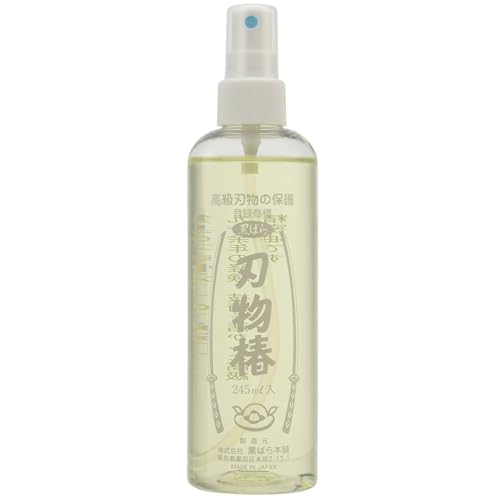
This larger KUROBARA dispenser uses the same basic camellia-oil concept as the compact bottle but supplies 245 ml, making it better suited to repeated care across several knives. The listing describes rust prevention for carbon-steel products and recommends cleaning and drying cutlery before applying an appropriate amount to a cloth. That sequence matters: oil is a protective step after moisture has been removed, not a substitute for washing and drying.
The dispenser format is helpful in a kitchen with a gyuto, petty knife, carbon-steel slicer, or other blades that need periodic attention. It also extends to scissors and gardening tools, although separate cloths are sensible for non-food equipment. Since the product is pure oil without a listed rust eraser, it is strongest as a long-term maintenance supply rather than a restoration kit.
Pros
- Provides a larger 245 ml quantity for repeated use.
- Uses pure tsubaki, or camellia, oil.
- Made in Japan according to the supplied information.
- Dispenser format suits regular application.
- Can serve several carbon-steel tools beyond kitchen knives.
Cons
- The larger bottle takes more storage space than the compact version.
- No rust eraser or application cloth is listed.
Pick this dispenser if several knives share one maintenance routine and buying small bottles would be inconvenient. A single-knife owner who oils only occasionally may prefer the smaller KUROBARA package. Its value lies in volume and consistency, especially for cooks who keep a collection of corrosion-prone blades.
To buy this product, click here.
7. Thirteen Chefs Knife and Honing Oil — Best for Sharpening-Routine Users
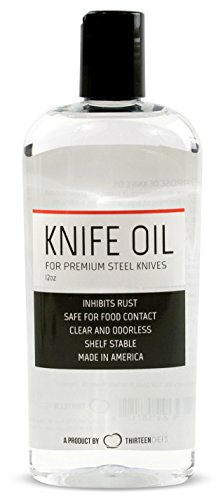
Thirteen Chefs positions this oil for carbon-steel knives and sharpening applications, including Japanese knives named in the supplied information. The listing describes it as odorless and tasteless, with a barrier that helps limit rust from humidity and water. That profile suits a cook who wants a blade-care oil that can sit near a sharpening setup without introducing a strong smell into the kitchen.
The product is also listed for sharpening or wet stones, garden tools, axes, and meat grinders. The broad use case is convenient, but stone compatibility still deserves attention because sharpening systems vary. A cook using an oil stone may find the dual purpose useful, while someone using a waterstone should avoid assuming that any honing oil belongs on that surface.
Pros
- Listed as food safe and made in USA facilities.
- Described as odorless and tasteless.
- Intended for carbon-steel and high-carbon knives.
- Suitable for listed sharpening-stone applications.
- Can also protect several metal tools.
Cons
- The supplied data does not specify the exact oil formulation.
- Broad sharpening compatibility should not be assumed for every stone type.
This oil fits a cook who maintains blades and sharpening equipment as part of the same routine. It is less compelling for someone seeking a camellia-specific product or a kit with built-in rust-removal tools. Its clearest advantage is the combination of kitchen-blade protection and stated honing use.
To buy this product, click here.
8. Kate Naturals Food-Grade Mineral Oil — Best for Board and Stainless-Blade Care

Kate Naturals is primarily a cutting-board oil, yet the supplied information also lists protection for stainless-steel blades and kitchen appliances. That makes it a useful choice for a household that wants one food-grade mineral oil for a wooden board and occasional stainless-knife care. The oil is described as colorless, odorless, tasteless, and designed to absorb into wood rather than leave a sticky surface film.
Application is clearly described for boards: wash and dry the surface, apply a small amount with a clean cloth, allow it to absorb for 15 to 20 minutes, then wipe away excess. That detail gives the product a practical place in a broader kitchen-care routine. Carbon-steel specialists may still prefer a dedicated camellia or blade oil, particularly if corrosion prevention is the central concern.
Pros
- Food-grade mineral oil is intended for kitchen surfaces.
- Useful for boards, wooden utensils, and stainless-steel blades.
- Listed as odorless, tasteless, and colorless.
- Absorbs into wood rather than leaving a heavy surface film.
- One bottle can support several kitchen-care tasks.
Cons
- Its primary focus is wooden-board conditioning rather than carbon-steel knives.
- No rust eraser or dedicated blade applicator is listed.
Choose Kate Naturals if board maintenance is part of the purchase and your knives are mainly stainless steel. It is a weaker match for someone caring for a reactive carbon-steel collection, where a dedicated knife oil and rust-care kit offer more direct support. The cross-use design is its practical reason for inclusion.
To buy this product, click here.
9. Norton Knife Sharpener Stone Oil — Best for Oil-Stone Maintenance

Norton’s product belongs at the edge of this roundup because its primary purpose is maintaining oil sharpening stones, rather than coating a kitchen knife for storage. The supplied information says the oil helps dislodge abrasive and metal chips so they do not bond to an oil-stone surface. For someone who sharpens kitchen knives on an oil stone, that function can be more relevant than a general blade-care bottle.
The product is described as meeting U.S. Pharmacopeia mineral-oil purity standards and comes in a compact 4.5-ounce can. The compatibility restriction is decisive: the listing says it is for oil stones and oil-stone systems, not waterstones or whetstone designs. Applying it to an incompatible sharpening surface can interfere with the intended sharpening process, so this is a specialized maintenance choice.
Pros
- Designed specifically for oil-stone maintenance.
- Helps remove abrasive and metal particles from the stone surface.
- Listed as meeting U.S. Pharmacopeia mineral-oil purity standards.
- Compact can stores easily with a sharpening system.
- Useful for kitchen knives and other tools sharpened on oil stones.
Cons
- Not compatible with waterstone or whetstone designs according to the listing.
- Its primary function is stone care, not routine blade protection.
Norton is the correct choice only for a knife owner who already uses an oil stone and understands that sharpening-stone oil differs from ordinary blade oil. For a carbon-steel knife stored between meals, select one of the dedicated camellia or food-safe blade oils above. This distinction prevents a common maintenance mix-up.
To buy this product, click here.
Buying Guide
Match the Oil to the Maintenance Job
Routine blade protection calls for a light oil applied after the knife has been washed and dried. A rust-care kit adds value when the blade already has surface spotting, while a stone oil belongs to the sharpening surface rather than the knife. Separating those jobs keeps a clean blade from becoming overtreated and prevents an oil-stone product from being used on a waterstone.
Check Food-Contact Suitability
Kitchen knives touch food, so product descriptions that identify food-safe or food-contact-safe use deserve priority. A product intended for machinery or outdoor tools may have broader lubrication uses, but that does not automatically make every formulation appropriate for a food-preparation blade. Wipe away excess oil before the next cooking session and follow the product’s application directions.
Think About Carbon Steel and Stainless Steel
Carbon-steel knives generally demand more deliberate drying and corrosion prevention than stainless models. Stainless steel is more resistant to rust, but it is not immune to staining or neglect. Carbon-steel owners will usually gain more from a dedicated camellia, mineral, or food-safe blade oil, while stainless-knife owners may prefer a multipurpose kitchen mineral oil that also conditions a cutting board.
Moisture sensitivity depends on the blade material. The guide to carbon-steel and stainless-steel maintenance explains why an oiling routine should not be copied blindly between knives.
Choose Bottle Size Based on Your Collection
A compact bottle works well beside one frequently used knife. Larger formats make more sense for a drawer containing several carbon-steel blades, scissors, or other tools. Bigger volume does take more storage space, so a large dispenser is most useful when the oil will be applied regularly rather than left untouched in a cabinet.
Decide Whether Accessories Matter
A cloth helps distribute a thin coat, and a rust eraser can save a separate purchase when light surface corrosion appears. The Yoshihiro and PuGez kits are therefore more complete than plain oil bottles. Accessories are less valuable for a stainless blade that is already clean, where the main requirement is a small amount of suitable oil and a clean wiping cloth.
Use the Correct Application Sequence
Clean the knife, dry it completely, and apply a small amount of oil to a cloth rather than flooding the blade. Wipe both sides evenly, then remove visible excess. Rust erasers should be used only on affected areas and with controlled pressure. A sharpening-stone oil requires a separate procedure and should be limited to the stone types identified by its product information.
Oil does not make damp, enclosed storage appropriate. Follow the principles for putting knives away clean, dry, and separated.
Best Kitchen Knife Oil FAQ
What is the best oil for a carbon-steel kitchen knife?
A food-safe camellia or suitable mineral-based blade oil is a strong starting point. The Yoshihiro kit is useful for buyers who also need a cloth and rust eraser, while KUROBARA offers a simpler pure camellia-oil routine. Clean and dry the blade before applying a thin coat.
Can I use cutting-board mineral oil on a kitchen knife?
Some food-grade mineral oils are listed for stainless-steel blade protection, including the Kate Naturals product in this guide. That does not make every cutting-board oil suitable for every blade. Check the product description, use a clean cloth, and treat a dedicated carbon-steel blade oil as the more direct choice for reactive steel.
Does knife oil remove rust?
Oil primarily helps create a protective barrier against moisture and oxidation. It does not replace a rust-removal method. Products such as the Yoshihiro and PuGez kits include rust erasers for light surface marks, but the eraser should be used carefully and only on the affected area.
How should I apply kitchen knife oil?
Wash the knife, dry it thoroughly, place a small amount of oil on a clean cloth, and wipe the blade evenly. Remove excess before storing the knife. The Yoshihiro listing recommends about one drop per side, which illustrates the light-coat approach rather than a saturated blade.
Is camellia oil suitable for Japanese kitchen knives?
Camellia, also called tsubaki, oil is commonly selected for maintaining carbon-steel cutlery, and several products here are specifically presented for that use. The knife still needs careful cleaning, drying, and storage. Japanese-style construction alone does not determine the required oil, so check the blade material and care instructions.
Can sharpening-stone oil be used as regular knife oil?
Do not assume the two products are interchangeable. Norton’s oil is listed for oil stones and oil-stone systems, and the product information specifically excludes waterstone or whetstone designs. A dedicated food-safe blade oil is the clearer choice for protecting a knife between uses.
Does stainless steel kitchenware need oil?
Stainless steel usually needs less corrosion protection than carbon steel, but cleaning and drying remain important. Oil can be useful during storage or for a knife exposed to humid conditions. A multipurpose food-grade mineral oil may suit stainless blades when the product information explicitly includes that use.
Final Verdict
The Yoshihiro 100% Pure Tsubaki Camellia Knife Oil Care Kit is the best overall match for most carbon-steel kitchen knife owners because it combines a food-safe camellia oil with the two tools that make maintenance easier: a cloth and a rust eraser. It fits the common situation where a cook needs routine protection today and a way to address a small mark tomorrow. KUROBARA’s compact pure tsubaki oil is the cleaner choice for buyers who already own a cloth and want a traditional dedicated oil, while the larger KUROBARA dispenser suits a collection.
PuGez is the more restorative alternative for blades that already show surface rust, and WALRUS OIL is a sensible option for owners maintaining wooden handles alongside metal blades. Kate Naturals works best as a broader board-and-stainless-care product, while Norton should be reserved for compatible oil-stone maintenance. Whichever bottle you choose, match the formula to the task, dry the knife before application, use a light coat, and keep sharpening-stone care separate from blade storage care.
