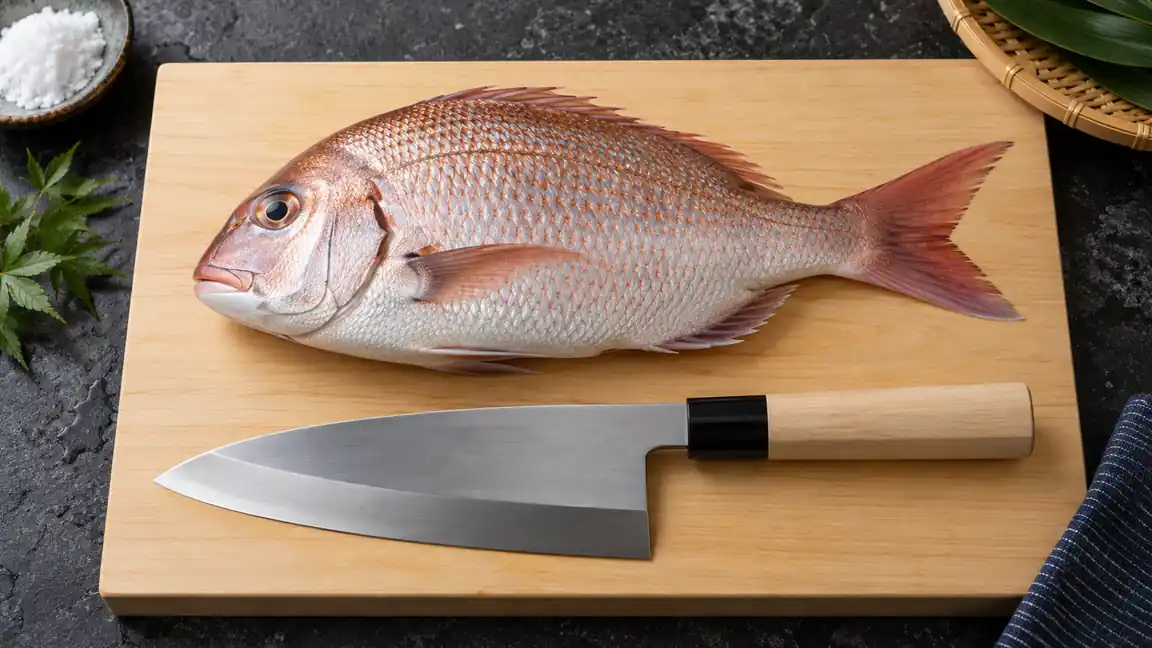
A deba knife earns its place in a kitchen for a specific job: breaking down whole fish. Its broad, heavy blade can handle tasks such as separating heads, working around bones, gutting, and portioning seafood with more authority than a thin general-purpose chef’s knife. The catch is that deba knives vary considerably. A 6-inch blade offers close control around smaller fish, while a 7-inch or 180mm model gives more reach and cutting power for larger ingredients.
Blade construction also changes the ownership experience. Single-bevel knives are shaped for a particular cutting motion and require sharpening attention that differs from ordinary double-bevel kitchen knives. Stainless and high-carbon stainless options generally demand less rust prevention than carbon steel, while white steel models can appeal to cooks who prioritize a keen, easily refreshed edge and accept more careful drying. Handle material, handedness, blade thickness, and the intended fish size matter just as much as the product title.
The selections below focus on genuine deba-style knives with documented features in the supplied product information. The Kai Seki Magoroku Kinju ST 180mm stands out as the strongest all-around match because it combines Japanese manufacture, a substantial blade length, stainless construction, and a laminated wood handle. Other picks serve different needs, including traditional white steel, left-handed use, compact fish preparation, and easier maintenance.
Quick Answer
- Kai Seki Magoroku Kinju ST 180mm: Best Overall for cooks who want a Japan-made stainless deba with useful reach for whole-fish preparation.
- 5.9-Inch White Steel Deba: Best for Traditional Carbon-Steel Handling, with a White Steel #2 blade, magnolia handle, and compact profile.
- WILDMOK Left-Handed 7-Inch Deba: Best Left-Handed Option because the listing specifically identifies its single-bevel configuration for left-handed users.
Best Deba Knife Comparison Table
| Product | Best For | Blade Length | Blade Construction | Handle |
|---|---|---|---|---|
| Kai Seki Magoroku Kinju ST | Overall fish preparation | 180mm | Molybdenum vanadium stainless steel | Laminated wood |
| Sakai Takayuki Kasumitogi | Traditional white steel use | 165mm | Yasuki white steel | Natural wood and resin ferrule |
| 5.9-Inch White Steel Deba | Small to medium fish | 150mm | White Steel #2 | Magnolia wood |
| imarku 7-Inch Deba | Home and restaurant fish prep | 7 inches | Japanese high-carbon stainless steel | Pakkawood |
| HOSHANHO 6-Inch Deba | Compact, substantial cutting | 6 inches | 10Cr15CoMoV core with layered stainless construction | Laminated rosewood |
| JapanBargain Seki City Deba | Japan-made seafood knife | 6.25 inches | High-carbon stainless steel | Natural wood |
| TOYOTSUHAN 6-Inch Deba | Right-handed bone and fish work | 6 inches | SK-5 high-carbon steel | Octagonal wood |
| Mercer Culinary Asian Collection | Heavy fish-head and tail work | 6 inches | High-carbon German steel | Traditional wood |
| WILDMOK Left-Handed Deba | Left-handed fish preparation | 7 inches | German stainless steel | Hard maple |
The detailed reviews explain how these knives differ in blade size, edge configuration, steel maintenance, and user fit.
1. Kai Seki Magoroku Kinju ST Japanese Deba Knife 180mm — Best Overall

The 180mm Kai Seki Magoroku Kinju ST is the most broadly convincing choice in this group for buyers who want a substantial deba from an established Japanese product line. Its molybdenum vanadium stainless steel blade offers a practical middle path for seafood preparation. The supplied information identifies the knife as made in Japan and lists a laminated wood handle, giving it a traditional visual character without requiring the same corrosion vigilance associated with an unprotected carbon-steel blade.
A 180mm blade is useful when the cutting board holds a larger fish or when the job involves more than delicate filleting. It gives the user additional working length for portioning and separating flesh, although it also takes more room than a compact 150mm knife. The included nylon cap is useful for protected storage, particularly for a heavy blade that should not be left loose in a drawer. Buyers who regularly prepare small fish may prefer a shorter model, but this Kai has the most versatile size among the selected options.
Pros
- Made in Japan according to the supplied product information.
- Long 180mm blade suits larger fish and broader preparation tasks.
- Molybdenum vanadium stainless steel requires less rust-focused care than listed white steel options.
- Laminated wood handle provides a traditional handle material with reinforced construction.
- Nylon cap supports safer storage when the knife is not in use.
Cons
- The 180mm length may feel excessive on a compact cutting board or with small fish.
- The available information does not specify the edge geometry or exact blade thickness.
This is the best fit for a seafood-focused home cook who wants reach, Japanese manufacture, and stainless construction in one package. It may be less suitable for someone learning deba technique on small fish or seeking a strongly documented single-bevel profile. The longer blade rewards a stable board and deliberate handling, while the stainless material makes everyday cleanup more forgiving. It is the strongest general recommendation because its size and material offer a useful balance rather than pushing the buyer toward one narrow preference.
To buy this product, click here.
2. Sakai Takayuki Kasumitogi Yasuki White Steel Deba 165mm — Best Traditional White Steel Design
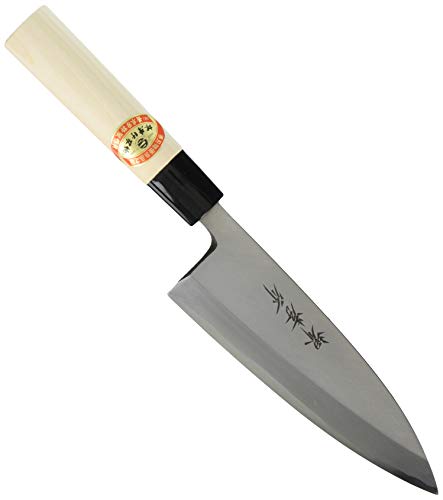
The Sakai Takayuki Kasumitogi takes a more traditional route than the stainless models above. Its 165mm blade uses Yasuki white steel, while the handle is listed as natural wood with a resin ferrule. That combination will appeal to cooks who specifically want a carbon-steel deba and understand that the knife deserves prompt washing and drying after seafood preparation.
At 165mm, the blade sits between compact and full-size options. That middle length can be useful for a household preparing a range of fish, since it offers more reach than a 150mm blade without the board demand of a 180mm model. The supplied information does not state whether this exact knife is single-bevel or provide a blade thickness, so buyers should confirm those details before purchase if they require a particular traditional grind. Its appeal rests mainly in the documented white steel and classic handle arrangement.
Pros
- Uses documented Yasuki white steel.
- 165mm length provides a middle ground for varied fish preparation.
- Natural wood handle suits buyers seeking a traditional Japanese-style presentation.
- Resin ferrule is listed as part of the handle construction.
- Specialized deba format is appropriate for whole-fish work.
Cons
- White steel requires more careful drying and corrosion prevention than stainless steel.
- The supplied information does not state the edge configuration or blade thickness.
Choose this model if the material and traditional character matter more than low-maintenance ownership. It is a poor match for a knife drawer where wet tools are routinely left until later. Buyers who want a stainless deba with a protective cap have more convenient alternatives, while cooks who enjoy maintaining carbon steel may appreciate the focused design. The 165mm size keeps it practical for many home boards and avoids the reach of the largest pick.
To buy this product, click here.
3. 5.9-Inch White Steel #2 Deba Knife — Best Compact Traditional Option

This 150mm deba is aimed at cooks who prepare small to medium fish and prefer a compact tool with traditional materials. The listing identifies a White Steel #2 blade, a magnolia wood handle, and hand-forged production in Seki City, Japan. White Steel #2 is specifically documented for this product, so it offers a clearer material identity than knives described only as high-carbon steel.
The compact 5.9-inch blade is easier to place on a crowded home cutting board than a 180mm model. Its listed weight of 236g gives it a substantial presence for its length, while the overall length is listed as 287mm. That combination suggests a knife intended for controlled fish preparation rather than featherweight filleting. The product information describes use for filleting, cutting heads, and small to medium fish, so it should not be treated as a universal substitute for a long fish butcher’s knife.
Pros
- Documented White Steel #2 blade material.
- 150mm length suits small to medium fish and tighter workspaces.
- Magnolia wood handle follows a traditional Japanese construction approach.
- Listed weight of 236g gives the short blade useful substance for deba tasks.
- Product information identifies hand-forged production in Seki City, Japan.
Cons
- Short blade limits reach on larger fish.
- White steel and magnolia wood require attentive washing, drying, and storage.
This is a smart choice for a cook whose weekend seafood routine involves trout, smaller snapper, or similar portions rather than large whole fish. It may frustrate someone who wants one deba for every size of ingredient. The shorter profile can also help a beginner keep the cutting area close and visible, but the carbon-steel maintenance still demands discipline. Select it for compact control and material preference, not for maximum versatility.
To buy this product, click here.
4. imarku 7-Inch Japanese Single-Bevel Deba Knife — Best for Detailed Fish Preparation
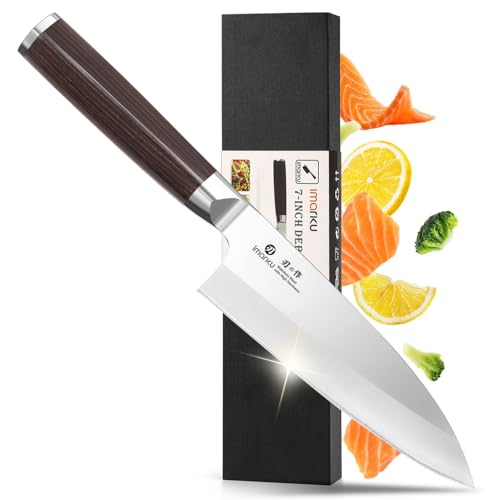
The imarku model has one of the clearest task descriptions in the supplied data. It is presented for handling whole fish, including gutting, filleting, cutting heads, and working through bones. The listing also identifies a single-bevel blade and describes a hand-sharpened edge angle of 12 to 15 degrees. That information is useful for buyers who want a defined edge style rather than a deba-shaped knife with an unspecified grind.
Its 7-inch length provides a practical amount of reach for home seafood preparation, while the Japanese high-carbon stainless steel construction points toward a maintenance routine that is less demanding than white steel. The Pakkawood handle is described as corrosion-resistant and firmly attached. Buyers should still wash and dry the knife by hand, since seafood residue and moisture are poor companions for any working blade. The single-bevel design also means sharpening should follow the knife’s actual geometry rather than generic double-bevel instructions.
Pros
- Listing clearly identifies a single-bevel blade.
- 7-inch length suits whole-fish preparation and filleting.
- Japanese high-carbon stainless steel offers a documented stainless-based construction.
- Pakkawood handle is listed as corrosion-resistant and firmly fixed.
- Product description covers gutting, head cutting, bone work, and filleting.
Cons
- Single-bevel sharpening requires more specialized technique than a conventional double-bevel knife.
- The supplied information does not identify the exact steel grade or blade thickness.
This pick fits a buyer who wants clearly stated single-bevel geometry and a medium-long blade for regular fish preparation. It is less suitable for someone seeking a general chef’s knife or a tool that can be sharpened casually with any pull-through device. The 7-inch size gives a useful compromise between control and reach, making it a strong alternative to the longer Kai for cooks who want the edge configuration described in greater detail.
To buy this product, click here.
5. HOSHANHO 6-Inch Deba Knife — Best for Substantial Compact Cutting

The HOSHANHO brings a compact blade together with unusually specific construction details. Its listing names a 10Cr15CoMoV steel core surrounded by more than eight alternating forged stainless-steel layers. It also lists a 250g weight and 4.5mm thickness, giving shoppers a clearer sense of its physical build than many competing entries. Those dimensions point toward a deba intended to apply pressure through fish and smaller bones rather than behave like a flexible fillet knife.
The product description calls out a V-shaped edge sharpened on both sides at 12 to 15 degrees. That double-bevel detail separates it from the single-bevel picks in this roundup and may be more familiar to cooks already comfortable with ordinary double-bevel sharpening. The laminated rosewood handle is described as ergonomic, while the 6-inch blade keeps the cutting area manageable. Buyers should still verify their preferred sharpening method, since the listing does not specify every aspect of the grind beyond the stated V edge.
Pros
- Documented 10Cr15CoMoV steel core with layered stainless construction.
- Listed 250g weight and 4.5mm thickness give the knife a substantial build.
- 6-inch blade suits compact fish-preparation spaces.
- Product information identifies a double-sided V-shaped edge.
- Laminated rosewood handle is described as ergonomic and suitable for humid use.
Cons
- The 250g weight may feel heavy for cooks who prefer a nimble filleting knife.
- The double-bevel format differs from a traditional single-bevel deba and may not suit every technique.
Pick this model for small to medium fish, firm cutting pressure, and a knife with documented physical specifications. It may be too dense for users who want a light slicer or a classic single-bevel experience. The layered construction is visually distinctive, but the practical reason to choose it is the stated thickness and weight. Those details make its intended heavy-duty role easier to understand before purchase.
To buy this product, click here.
6. JapanBargain Seki City 6.25-Inch Deba Knife — Best Japan-Made Stainless Seafood Option

The JapanBargain knife is a practical choice for buyers who want a Japan-made deba in a medium compact size. The supplied information identifies Seki City production, a 6.25-inch high-carbon stainless steel blade, a single-bevel edge, and a natural wood handle. That combination targets the familiar deba workflow of gutting, filleting, cutting through fish, and separating portions around bones.
A 6.25-inch blade is a useful size for a household that wants more reach than a 150mm knife without moving to a full 180mm blade. The high-carbon stainless description does not identify a specific alloy, so shoppers should avoid assuming it behaves exactly like a named Japanese steel. Still, stainless construction is a sensible direction for regular seafood work, where prompt cleaning is essential but a highly reactive carbon blade may feel demanding.
Pros
- Product information identifies manufacture in Seki City, Japan.
- Single-bevel blade suits traditional deba-style fish preparation.
- 6.25-inch length offers a useful middle size for home kitchens.
- High-carbon stainless construction is listed as corrosion-resistant.
- Natural wood handle provides a traditional grip material.
Cons
- The steel description does not identify a precise alloy grade.
- The single-bevel edge still requires compatible sharpening technique.
This knife makes sense for someone who values Japanese origin and a traditional single-bevel format without wanting a very long blade. It may be less appealing to a buyer who needs a clearly named steel or a documented weight. Its dimensions suit ordinary home seafood preparation, especially where the board is moderate in size and the fish are not especially large.
To buy this product, click here.
7. TOYOTSUHAN 6-Inch SK-5 Deba Knife — Best Right-Handed Traditional Edge

The TOYOTSUHAN is especially clear about its intended user: the listing specifies a right-handed single-bevel design. It also names SK-5 high-carbon steel, a 4.1mm spine, and a 6-inch blade. The pointed tip is described for entry cuts and gutting, while the flat back is intended to rest against the fish during flesh separation. Those details give this knife a strongly defined role rather than leaving the buyer to infer its geometry from the word deba alone.
The octagonal wood handle follows a traditional Japanese-style profile, and the listing states that the knife is made in Japan. SK-5 is a carbon steel, so the care instructions supplied with the product matter: hand washing, immediate drying, avoiding acidic foods and frozen ingredients, and occasional light mineral oil application. A 4.1mm spine gives the knife a robust profile, but the right-handed single bevel will be a poor match for left-handed users.
Pros
- Right-handed single-bevel configuration is clearly identified.
- SK-5 high-carbon steel is a documented blade material.
- 4.1mm spine supports the knife’s intended heavy fish-preparation role.
- Pointed tip and flat back are described for gutting and flesh separation.
- Octagonal wood handle offers a defined traditional-style grip shape.
Cons
- Carbon steel requires immediate drying and additional rust prevention.
- Right-handed geometry limits suitability for left-handed users.
Choose this model for right-handed cooks who want a compact, thick-bladed deba with clearly stated single-bevel construction. Skip it if your kitchen routine includes frozen ingredients or if you prefer stainless steel’s simpler cleanup. The 6-inch length favors close control, while the 4.1mm spine supports the heavier work that distinguishes a deba from a thin fillet knife.
To buy this product, click here.
8. Mercer Culinary Asian Collection Deba Knife — Best for Heavy Fish-Head Work

The Mercer Culinary Asian Collection model is described as a 6-inch deba made with high-carbon German steel. Its taper-ground blade has a fine stone finish and a single blade edge, while the traditional wood handle keeps the format familiar. The product information specifically points to cutting fish heads and tails and other heavy-use tasks, which makes it more appropriate for robust fish breakdown than delicate sashimi slicing alone.
Maintenance guidance is unusually direct. Mercer recommends hand washing with warm water and mild soap, followed by complete drying, and advises against dishwashers or prolonged submersion. That advice should be treated as part of the ownership decision, especially for cooks who prefer to place every kitchen tool in a machine after dinner. The listing does not provide an exact alloy grade, weight, or detailed edge angle, so this knife is easier to evaluate by its intended task and basic construction than by fine metallurgical comparisons.
Pros
- 6-inch blade is suitable for compact fish-preparation work.
- Single-edge construction is documented.
- Product information specifically supports fish-head and tail cutting.
- High-carbon German steel is identified as the blade material.
- Care instructions clearly explain hand washing and drying requirements.
Cons
- The listing does not provide a specific steel grade, weight, or edge angle.
- Dishwasher use and prolonged soaking are specifically discouraged.
This model is a sensible fit for a cook who wants a straightforward 6-inch deba for breaking down fish and is willing to wash it by hand. It may be a weaker choice for someone comparing exact steel designations or seeking a long blade for large fish. Its practical identity is clear: a compact, single-edge tool for heavier seafood tasks, with care requirements that should be easy to follow but should not be ignored.
To buy this product, click here.
9. WILDMOK Left-Handed 7-Inch Deba Knife — Best Left-Handed Option

The WILDMOK fills a gap that many deba roundups overlook. Its listing explicitly identifies a left-handed, single-bevel configuration, so the product is relevant to cooks who cannot comfortably use a right-handed deba. It uses a 7-inch blade and German stainless steel, with the available information listing a 56 to 58 HRC range and a 13 to 15 degree cutting edge. Those details make the knife easier to place within a buyer’s search than a generic ambidextrous kitchen knife.
The hard maple handle is described as ergonomic and balanced, while the blade length provides useful reach for whole fish. Left-handed buyers should still inspect the exact edge orientation on arrival and use sharpening equipment compatible with the single-bevel design. The stainless construction should be easier to manage than the carbon-steel alternatives, although stainless does not remove the need for washing and drying after seafood work.
Pros
- Specifically listed as a left-handed single-bevel knife.
- 7-inch blade provides useful reach for fish preparation.
- German stainless steel construction is documented.
- Available information includes a 56 to 58 HRC range.
- Hard maple handle offers a traditional wood-based grip material.
Cons
- Single-bevel geometry restricts sharpening compatibility compared with ordinary double-bevel knives.
- The product title includes other Asian knife terminology, so buyers should verify the exact deba configuration before use.
This is the clear choice for a left-handed cook who needs a dedicated deba rather than trying to reverse a right-handed model. Right-handed buyers have more natural alternatives in this roundup, while cooks seeking a named Japanese steel will find the German stainless description less specific. The 7-inch blade and stainless construction create a useful combination for regular fish preparation, provided the edge orientation matches the buyer’s hand.
To buy this product, click here.
Buying Guide
Match Blade Length to the Fish You Prepare
Blade length affects reach, control, and the amount of cutting-board space required. A 150mm deba is easier to manage around smaller fish and compact boards, while 165mm to 180mm models offer more working length for larger ingredients. A longer blade is not automatically better. If most of the seafood entering the kitchen is small, excess length can make close work feel awkward and may encourage unnecessary contact with the board.
Understand Single-Bevel and Double-Bevel Edges
Several selections use a single-bevel edge, which is a defining feature of many traditional deba knives. The asymmetric geometry is intended for controlled fish preparation, but it also changes sharpening technique. The HOSHANHO is described with a double-sided V edge, making it a different proposition despite its deba format. Check the exact edge style before choosing a sharpening system, especially if you already own equipment intended for conventional double-bevel kitchen knives.
Choose Steel Based on Maintenance Tolerance
White Steel #2, Yasuki white steel, and SK-5 carbon steel can appeal to cooks who want traditional carbon-steel characteristics and are prepared to wash and dry the blade promptly. Stainless and high-carbon stainless options are generally a more forgiving direction for busy kitchens, but the product data does not establish that any knife is rust-proof. Acidic food, moisture, and seafood residue still deserve quick cleanup.
Look at Thickness and Weight for Bone Work
A deba is different from a flexible fillet knife because it is expected to handle more forceful fish preparation. The HOSHANHO lists a 4.5mm thickness and 250g weight, while the TOYOTSUHAN lists a 4.1mm spine. These are meaningful design details for buyers who want a substantial blade. A cook focused on delicate skin removal may prefer less bulk, while someone separating heads and joints may value a sturdier profile. Never use a knife outside the cutting tasks its construction supports, particularly with frozen food or unusually hard material.
Check Handedness Before Ordering
Single-bevel knives are often made for a particular hand. The TOYOTSUHAN is identified as right-handed, while the WILDMOK is identified as left-handed. This distinction should be checked before purchase rather than treated as a minor handle preference. A right-handed deba may be an awkward and unsuitable choice for a left-handed cook, even when the blade length and steel look attractive on paper.
Evaluate the Handle and Storage Routine
Wood, laminated wood, rosewood, magnolia, and hard maple appear across these products. The exact feel will vary by hand size and grip, so material alone cannot guarantee comfort. Storage also matters. The Kai includes a nylon cap, while several other knives do not list a protective cover. Keep a sharp deba secured so the edge cannot contact loose utensils, and dry the blade before placing it into storage.
Plan for Specialized Sharpening
A deba should not automatically be placed into a generic pull-through sharpener. Single-bevel knives need an approach that preserves the intended geometry, while a double-bevel model follows a different maintenance path. The supplied products do not all state their recommended sharpening angle or exact grind details. If that information is important to you, confirm it before purchase and select a sharpening method that matches the actual blade rather than relying on the knife’s marketing name.
Best Deba Knife FAQ
Traditional grinds need appropriate maintenance. Check Japanese-knife sharpening by edge geometry and the maker’s instructions before using a fixed-angle device.
What is a deba knife used for?
A deba knife is intended primarily for breaking down whole fish. Depending on its construction and the maker’s stated use, that can include gutting, cutting heads and tails, separating flesh from bones, and portioning seafood. It is a specialized preparation knife, so it should not automatically replace a chef’s knife for vegetables or a thin fillet knife for every delicate task.
Is a deba knife single-bevel?
Many traditional deba knives are single-bevel, but the supplied products show that the category is not uniform. The imarku, JapanBargain, TOYOTSUHAN, Mercer, and WILDMOK listings identify single-edge or single-bevel features. The HOSHANHO listing describes a V-shaped edge sharpened on both sides, making it a double-bevel example. Check the exact product information before buying sharpening equipment.
What deba length is best for home use?
A 150mm to 165mm blade can suit small and medium fish and may be easier to control on a home cutting board. A 180mm model offers more reach for larger fish but needs more workspace. The right length depends on the ingredients you prepare, your board size, and whether close control or longer cutting passes matter more.
Are stainless steel deba knives easier to maintain than white steel models?
Stainless and high-carbon stainless blades generally reduce the amount of rust-focused care compared with the listed white steel and SK-5 carbon-steel models. They still need hand washing and thorough drying after seafood preparation. Stainless should be treated as corrosion-resistant rather than corrosion-proof.
Can a deba knife cut through fish bones?
Several listings describe their products for fish-head, tail, bone, or heavy fish-preparation work. That does not mean every deba should be used on every bone. Use controlled force on the type of fish preparation the product supports, and avoid frozen ingredients unless the manufacturer specifically allows them. Blade thickness and intended construction matter.
The salmon-filleting guide explains the food-preparation stages, but its flexible-blade method should not be treated as a deba-specific technique.
Can a left-handed person use a right-handed deba?
A right-handed single-bevel deba is not the best default for a left-handed user because the bevel orientation affects how the blade tracks through the food. The WILDMOK listing specifically identifies a left-handed configuration, making it the more relevant selection here. Verify the edge orientation before ordering.
How should a deba knife be stored?
Wash and dry the knife before storage, then use a cap, sheath, knife block, or another secure method that protects the edge and prevents accidental contact. The Kai listing includes a nylon cap. Do not leave a sharp deba loose in a drawer with other utensils, where the blade can be damaged and the user can encounter an exposed edge.
Final Verdict
The Kai Seki Magoroku Kinju ST 180mm is the Best Overall choice because it combines a useful long blade, Japanese manufacture, molybdenum vanadium stainless steel, laminated wood construction, and a nylon storage cap. It suits cooks who prepare a range of whole fish and want more forgiving maintenance than a white steel or SK-5 model. Its length is the main trade-off, since a smaller board or smaller fish may favor a shorter blade.
For traditional carbon-steel ownership, the Sakai Takayuki Kasumitogi and the 5.9-inch White Steel #2 model offer clearer white-steel identities, with the latter better suited to small and medium fish. The WILDMOK deserves attention from left-handed buyers, while the imarku provides a clearly described 7-inch single-bevel format for detailed seafood work. Match the choice to your hand, fish size, edge preference, and willingness to wash and dry the blade immediately. A deba works best when its specialized geometry and maintenance routine fit the cook using it.
