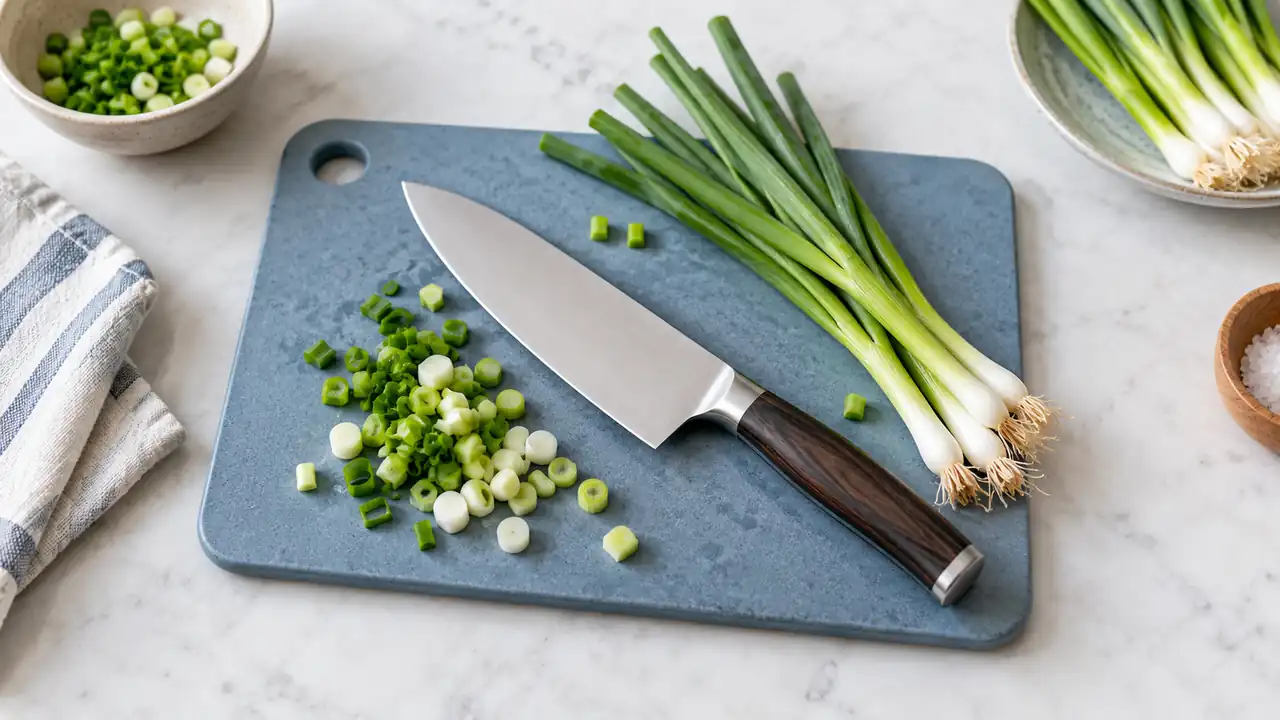
A chef’s knife that feels comfortable in a larger hand can seem clumsy in a smaller one. The blade may reach too far across the cutting board, the handle may require an awkward grip, or the extra length may make precise chopping feel more tiring than it should. That is why shoppers searching for the Best Chef Knife For Small Hands often focus on compact blades, manageable weight, and handles that allow a secure pinch grip without crowding the fingers.
Blade length matters, but it is only part of the decision. A 6-inch chef knife can offer close control for herbs, vegetables, and smaller portions, while a 7-inch santoku may provide more cutting surface without the reach of a traditional 8-inch chef’s knife. Steel, edge angle, blade height, handle shape, and maintenance also influence ownership. A small-handed cook who prepares large roasts may still prefer an 8-inch blade, while someone working in a compact kitchen may value a shorter knife above every other feature.
The products below include compact chef knives, shorter Japanese-style options, a santoku, and several full-size knives with handle features that may suit some smaller-handed users. The strongest direct match is the SANMEIHO 6-inch model because its compact blade is specifically presented for small hands, although the Sunnecko 5.5-inch knife is a compelling alternative for buyers who want a sheath and a short working edge.
Quick Answer
- Best Overall: The SANMEIHO 6 Inch Chef Knife is the clearest match for small hands because its 6-inch blade emphasizes close control and compact handling.
- Best Compact Alternative: The Sunnecko 5.5 Inch Small Chef Knife offers the shortest listed blade, a Pakkawood handle, and a protective sheath for drawer or travel storage.
- Best Short Santoku: The 7-inch imarku Santoku provides a shorter profile than a standard chef’s knife, along with a hollow-edge design and a Pakkawood handle.
Best Chef Knife For Small Hands Comparison Table
| Product | Best For | Blade Length | Steel | Handle |
|---|---|---|---|---|
| SANMEIHO 6 Inch Chef Knife | Small-hand control | 6 inches | High-carbon steel | Red sandalwood |
| Sunnecko Small Chef Knife | Compact storage and portability | 5.5 inches | High-carbon stainless steel | Pakkawood |
| imarku Santoku Knife | Short vegetable-prep knife | 7 inches | High-carbon stainless steel | Pakkawood |
| Mercer Culinary Ultimate White | Simple everyday prep | 8 inches | High-carbon Japanese steel | Textured ergonomic handle |
| imarku Japanese Chef Knife | Full-size versatility | 8 inches | High-carbon stainless steel | Pakka |
| FACZER Chef Knife | Compact-kitchen storage bundle | 8 inches | High-carbon stainless steel | Wood |
| Emojoy Damascus Chef Knife | Shorter-feeling handle design | 8 inches | Layered Japanese steel | Olive wood |
| Atumuryou Damascus Chef Knife | Documented VG10 construction | 8 inches | VG10 core | Resin wood |
| SHAN ZU Gyuto Knife | Full-size Japanese-style prep | 8 inches | 10Cr15MoV core | G10 and rosewood |
The detailed reviews explain how each blade length, handle material, edge description, and storage feature affects suitability for smaller hands.
1. SANMEIHO 6 Inch Chef Knife for Small Hands — Best Overall

The SANMEIHO earns the top position because the available product information addresses the central problem directly: controlling a chef-style blade with smaller hands. Its 6-inch length sits well below the 8-inch format found on many conventional chef’s knives, so the cutting edge should feel less imposing during detail work such as mincing herbs, trimming vegetables, or portioning smaller ingredients. A shorter blade also takes up less room on a crowded board, which can make each cut easier to place.
The red sandalwood handle is another relevant detail, although handle comfort remains personal because exact handle dimensions are not supplied. The knife is described as balanced and suitable for chopping, slicing, dicing, and sashimi preparation. Its high-carbon steel description does not identify a specific alloy or hardness, so buyers should focus on the compact format rather than assuming a particular sharpening or edge-retention profile. Hand washing and thorough drying are sensible practices for a high-carbon blade unless the product instructions state otherwise.
Pros
- 6-inch blade directly suits shoppers seeking a compact chef knife.
- Shorter edge can provide close control on smaller cutting boards.
- Red sandalwood handle is presented as ergonomic and secure.
- Suitable for chopping, slicing, dicing, and sashimi-style preparation.
- Compact format may feel less cumbersome than a standard 8-inch chef’s knife.
Cons
- The available information does not identify the exact steel alloy or hardness.
- A 6-inch blade offers less reach for large cabbages, roasts, and broad ingredients.
This is the strongest choice for a smaller-handed cook who values control above maximum cutting capacity. It should also appeal to apartment dwellers and anyone who finds a traditional chef’s knife too long. Buyers who regularly prepare large ingredients may prefer a 7- or 8-inch model, while those seeking very specific sharpening guidance may prefer a knife with a documented steel designation.
To buy this product, click here.
2. Sunnecko 5.5 Inch Small Chef Knife — Best Compact Alternative

At 5.5 inches, the Sunnecko is the shortest blade in this group, making it especially relevant for cooks who feel overwhelmed by the sweeping reach of a standard chef’s knife. That compact edge can be useful for small portions, narrow boards, lunch preparation, and detail-oriented tasks where the tip stays close to the hand. The listed 12-to-15-degree edge description suggests a relatively fine cutting geometry, but the listing does not clarify whether that figure is stated per side or as a total angle, so it should not be treated as a complete sharpening specification.
The Pakkawood handle and included PVC sheath add practical appeal. A sheath can protect the edge and reduce the chance of an exposed blade sliding around in a drawer, while also making the knife easier to carry for outdoor cooking. The high-carbon stainless steel construction should require less corrosion vigilance than plain carbon steel, though hand washing and drying remain prudent. The short blade will be easy to maneuver, but it may feel undersized for a large squash, roast, or full head of cabbage.
Pros
- 5.5-inch blade is highly compact for small-hand control.
- Pakkawood handle is described as ergonomic and slip-resistant.
- Included sheath supports safer drawer or travel storage.
- High-carbon stainless steel offers a practical balance of sharpness and corrosion resistance.
- Suitable for vegetables, meat portions, fruit, and everyday prep.
Cons
- The very short blade has limited reach for large ingredients.
- The stated edge angle is not clearly identified as per-side or inclusive.
Choose this model if compactness is the first priority and most meals involve modest quantities. It is a particularly logical fit for a cook who wants a chef-style knife that takes up little board space. Skip it if you rely on rocking cuts across broad ingredients or want one blade to handle large family meal preparation without repeated repositioning.
To buy this product, click here.
3. imarku Santoku Knife 7 Inch — Best Short Santoku
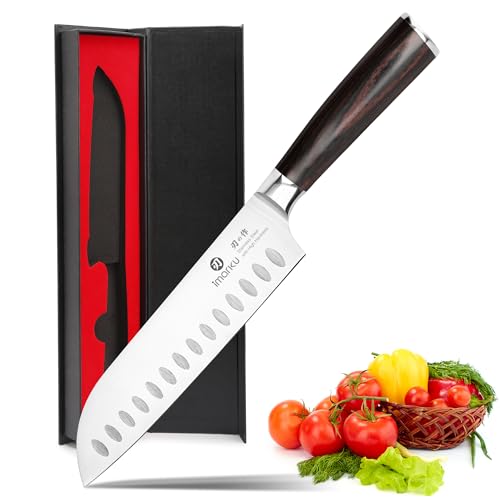
A santoku changes the handling equation through its shorter 7-inch blade and generally flatter profile. The imarku model is a useful option for small-handed cooks who want more working surface than a 5.5- or 6-inch knife provides without moving to a full-size chef’s knife. Its listed 2.5 mm blade thickness gives shoppers a concrete specification, while the 15-to-18-degree-per-side edge description provides more sharpening context than several competing listings.
The hollow-edge design is intended to leave small air gaps between the blade and food, which may help reduce sticking during slicing and mincing. Its Pakkawood handle is described as suitable for different hand sizes, though exact dimensions are unavailable and comfort cannot be guaranteed for every grip. The high-carbon stainless steel is described as resistant to rust, corrosion, and discoloration. This makes the knife a practical candidate for cooks who want shorter vegetable-prep control with relatively straightforward care.
Pros
- 7-inch santoku format offers a middle ground between compact and full-size knives.
- Hollow-edge design may reduce food contact during slicing.
- 15-to-18-degree-per-side edge information aids sharpening planning.
- Pakkawood handle is described as suitable for varied hand sizes.
- High-carbon stainless steel is intended to resist rust and discoloration.
Cons
- Santoku geometry may feel less natural for cooks who prefer a pronounced rocking motion.
- The listing does not provide exact handle dimensions or knife weight.
This is a smart alternative for someone whose small hands need a shorter knife but whose cooking still involves frequent vegetables, fruit, and boneless proteins. The flatter santoku profile favors controlled chopping and push cuts. A traditional chef’s knife may be a better fit for users who rely on a curved belly, while the imarku’s 7-inch length remains less compact than the two dedicated small chef knives above.
To buy this product, click here.
4. Mercer Culinary Ultimate White, 8 Inch Chef’s Knife — Best for Familiar Everyday Prep
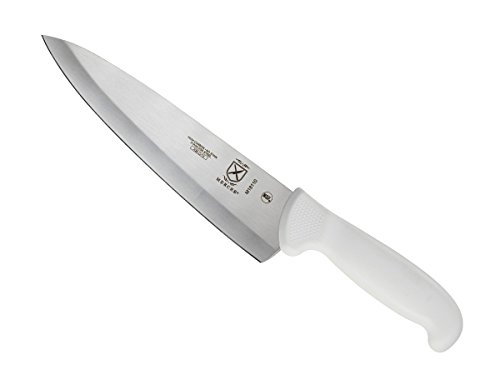
The Mercer is the least specialized choice for small hands because its blade measures 8 inches, yet its handle details may still appeal to users who want a conventional chef’s knife with a more secure grip. Textured finger points are intended to provide traction and comfort, which can matter when a cook uses a pinch grip or shifts between chopping and mincing. The published information identifies high-carbon Japanese steel but does not provide an alloy designation, hardness, or exact weight.
Its familiar chef’s-knife shape suits common tasks such as onions, shallots, herbs, garlic, and cabbage. That broad utility can be valuable in a household where one knife handles most preparation, though the longer edge requires more clearance and may feel cumbersome for smaller hands. Mercer specifically recommends hand washing with mild soap, rinsing, and drying, and advises against dishwasher use or prolonged submersion.
Pros
- Conventional chef’s-knife profile handles a broad range of kitchen tasks.
- Textured finger points support grip security.
- High-carbon Japanese steel is listed for the blade.
- Useful for chopping, mincing, dicing, and herb preparation.
- Clear hand-washing and drying guidance is provided.
Cons
- 8-inch blade may feel long for users specifically seeking small-hand control.
- Exact steel composition, weight, and handle dimensions are not supplied.
The Mercer makes sense for a smaller-handed cook who already prefers the reach of a standard chef’s knife and wants a textured handle rather than a compact blade. It is less suitable for someone whose main complaint is that long knives feel unwieldy. Its straightforward construction and clear care instructions may appeal to everyday home cooks, but the knife should be compared carefully against the shorter choices before purchase.
To buy this product, click here.
5. imarku Japanese Chef Knife 8 Inch — Best for Full-Size Versatility

The imarku 8-inch gyutou-style knife is aimed at cooks who want one broad-purpose blade for slicing, chopping, dicing, and meat preparation. Its 56-to-58 HRC specification gives a useful indication of the listed hardness range, while the blade description identifies high-carbon stainless steel containing 16-to-18 percent chromium. Those details suggest a stainless-oriented maintenance profile, but they do not establish a particular alloy or guarantee a specific edge life.
The Pakka handle is the most relevant feature for smaller-handed users, since a secure grip can matter as much as blade length. Still, the 8-inch edge remains a substantial reach, and the supplied information does not include handle dimensions or weight. This knife may suit a cook with smaller hands who regularly prepares large vegetables, meat cuts, or family-size meals, but it is a less direct ergonomic match than the 5.5- to 7-inch options.
Pros
- Versatile 8-inch gyutou-style format handles varied food preparation.
- Listed 56-to-58 HRC hardness provides useful specification context.
- High-carbon stainless construction includes a stated chromium range.
- Pakka handle is intended to reduce grip fatigue during extended use.
- Suitable for cooks who need full-size reach despite smaller hands.
Cons
- 8-inch length may be difficult to control on a small cutting board.
- Exact handle size and overall weight are not provided.
Pick this model if your small hands do not prevent you from using a full-length chef’s knife and your meals often involve larger ingredients. Its documented hardness and stainless construction add useful information for maintenance planning. A shopper seeking maximum maneuverability for small portions should stay with a shorter knife, while a full-size user may appreciate the extra reach.
To buy this product, click here.
6. FACZER Chef Knife 8 Inch — Best for Included Storage

The FACZER is a full-size chef’s knife with several included accessories, including a magnetic knife block and sharpener. That package may appeal to a small-kitchen cook who wants the blade stored safely without buying a separate holder. The listing gives a 58 plus-or-minus 2 HRC hardness rating and describes a high-carbon stainless steel blade, along with a stated 12-degree edge on each side. These are useful specifications, although the sharpener’s construction and compatibility details are not provided.
The curved wooden handle and polished bolster are intended to support a pinch grip, while the hammered finish is described as creating air pockets that may reduce food contact. Such surface patterning should be treated as a design feature rather than proof of superior cutting performance. Since the blade is 8 inches long, small-handed buyers should assess board space and reach before choosing it. The accessory bundle adds convenience, but it does not change the knife’s full-size handling demands.
Pros
- Includes a magnetic knife block for protected countertop storage.
- Includes a sharpener, reducing the need to purchase one immediately.
- Published information lists high-carbon stainless steel and 58 plus-or-minus 2 HRC.
- 12-degree-per-side edge specification offers sharpening context.
- Wooden handle and bolster support a conventional pinch-grip approach.
Cons
- 8-inch blade is a less direct fit for users who need compact control.
- The included sharpener’s abrasive type and blade compatibility are not specified.
This knife is best for a smaller-handed cook who values storage convenience and wants a full-size multipurpose blade. It may work well in a shared kitchen where the included block keeps the knife off the counter or out of a loose drawer. Buyers with very limited board space should choose a shorter model, and anyone using a delicate edge should verify the sharpener’s method before putting the knife through it.
To buy this product, click here.
7. Emojoy 8-Inch Damascus Chef Knife — Best for a Half-Bolster Grip

The Emojoy combines a full 8-inch blade with a half-bolster handle design, a detail that may give smaller hands more freedom around the heel than a larger bolster would. The handle uses olive wood, and the listing describes an organic shape intended for different hand sizes. Exact dimensions are unavailable, so the half-bolster should be viewed as a potentially useful grip feature rather than a guarantee of comfort.
The blade is described as 67-layer Damascus with 0.98 percent carbon, 18 percent chromium, and a listed 58 HRC hardness. The product information also identifies a 15-degree edge, although it does not clarify whether that figure is per side. The layered pattern adds visual character, but the available data does not establish that the pattern improves cutting performance. As an 8-inch chef’s knife, it still requires more board clearance than the compact leaders.
Pros
- Half-bolster design may leave more room for a pinch grip.
- Olive wood handle is shaped for a range of hand sizes.
- Listing provides carbon, chromium, and 58 HRC information.
- 15-degree edge specification gives a starting point for maintenance planning.
- Includes a wooden box that supports protected presentation and storage.
Cons
- 8-inch blade may feel too large for cooks seeking close, compact control.
- The listed edge angle is not identified as per-side or inclusive.
This option suits small-handed cooks who prefer a longer chef’s knife but want an open heel area and a distinctive handle. It is also a reasonable choice for someone who values the appearance of layered cladding. The compact SANMEIHO or Sunnecko remains a better ergonomic match for short-board work, while the Emojoy offers reach for larger preparation tasks.
To buy this product, click here.
8. Atumuryou Japanese Chef Knife 8 Inch — Best for Documented VG10 Construction

The Atumuryou is the most clearly specified steel option in the selection. Its blade is described as having a VG10 core, 67-layer Damascus cladding, and a listed 62 HRC hardness. That information helps buyers distinguish the core steel from the decorative or protective outer layers. It still does not prove how long the edge will last in a particular kitchen, but it gives a more useful starting point for sharpening and care decisions than a generic high-carbon label.
The stabilized wood and resin handle is described as slip-resistant, and the listing presents a 12-degree edge. The 8-inch blade provides broad coverage for vegetables, meat, and fish, though it may ask more of a small-handed user’s reach and wrist control. A sharp, harder edge also deserves sensible handling and an appropriate sharpening method. Buyers should avoid assuming that the Damascus layers or hardness automatically make this knife the best fit for every cutting style.
Pros
- VG10 core is specifically identified in the product information.
- 67-layer cladding provides a documented layered construction.
- Listed 62 HRC hardness gives useful technical context.
- Stabilized wood and resin handle is intended to provide a secure grip.
- Full-size blade covers large preparation tasks efficiently.
Cons
- 8-inch length may be demanding for users who need a compact blade.
- A harder, fine-edge design may require more careful sharpening and handling.
This knife is appropriate for a smaller-handed cook who wants full-size capacity and places a high value on a named steel core. It is less compelling for someone whose main concern is reducing reach or board fatigue. The handle material may provide useful grip stability, but without verified dimensions, shoppers should compare the handle shape carefully against their preferred grip.
To buy this product, click here.
9. SHAN ZU 8 Inch Japanese Chef Knife — Best for Full-Size Gyuto Handling

The SHAN ZU is a gyuto-style choice for smaller-handed users who still want a full-length blade. Its 10Cr15MoV core, nine-layer construction, and listed 62 HRC hardness provide more technical detail than many general-purpose knives. The listing also identifies a 12-degree edge, although the angle convention is not specified. These details may interest cooks who maintain their knives carefully and want to understand the stated construction before choosing a sharpening approach.
The handle combines G10 at the front with rosewood at the back and uses a brass pin. G10 may offer a more secure contact surface, while the mixed materials create a different grip character from the all-wood handles elsewhere in the group. The 8-inch blade remains the central trade-off. A smaller-handed cook who regularly slices large vegetables or portions meat may appreciate its reach, while someone seeking effortless close control will likely find the 6-inch and 5.5-inch knives more appropriate.
Pros
- 10Cr15MoV core is specifically identified.
- Nine-layer construction and 62 HRC hardness are listed.
- G10 and rosewood handle combines a textured material with wood.
- Gyuto-style format supports broad everyday preparation.
- 12-degree edge information helps frame sharpening discussions.
Cons
- 8-inch blade is a substantial size for the target user.
- The listing does not provide exact weight or handle dimensions.
This model is for the smaller-handed cook who wants a Japanese-style gyuto format and is comfortable managing a full-size edge. The G10 front section may appeal to users who prefer a more structured grip than smooth wood offers. Those seeking a compact knife for small boards should rank it below the shorter options, while cooks preparing large ingredients may find its reach worthwhile.
To buy this product, click here.
Buying Guide
Start With Blade Length, Not the Marketing Label
For smaller hands, blade length is usually the quickest way to narrow the field. The 5.5-inch Sunnecko and 6-inch SANMEIHO give the hand less edge to guide, which can help with herbs, small vegetables, fruit, and modest portions. A 7-inch santoku sits between compact and full-size formats. An 8-inch chef’s knife offers more reach, but it also occupies more board space and may require a wider grip and larger cutting arc.
Hand size alone does not determine the ideal blade length. The guide to chef’s-knife sizing and handling separates handle fit from reach, balance, and board clearance.
Think about the largest ingredient you prepare in a typical week. Someone making small weekday meals may gain more from a short blade, while someone routinely slicing melons, cabbage, or large roasts may find an overly compact knife slow and awkward.
Match the Profile to Your Cutting Motion
Traditional chef’s knives generally provide a curved profile that accommodates rocking cuts, while a santoku tends to support flatter chopping and push-cutting motions. The imarku 7-inch santoku may therefore suit a small-handed cook who prefers to lift and push the blade through vegetables. A compact chef knife may feel more familiar to someone who rocks the edge through herbs or garlic.
Neither profile is universally better. The important question is whether the blade shape matches the movement you already use comfortably. Changing both blade length and cutting motion at once can make a knife feel unfamiliar.
Read Steel Claims With Care
Several knives here use broad labels such as high-carbon stainless steel, while the Atumuryou identifies a VG10 core and the SHAN ZU identifies 10Cr15MoV. A named steel gives more information than a general marketing description, but it still does not determine the complete cutting experience. Geometry, heat treatment, edge preparation, and maintenance also matter.
High-carbon stainless steel can offer a practical maintenance balance, but it is not automatically corrosion-proof. Wipe the blade dry after washing, and avoid leaving it in standing water. The Mercer specifically advises hand washing and drying, which is a useful reminder that kitchen knives should not be treated as disposable dishwasher tools unless the maker clearly supports that use.
Look Beyond the Word “Ergonomic”
Small hands do not all have the same preferences. Finger length, palm width, grip style, and wrist comfort can change which handle works best. The SANMEIHO uses red sandalwood, the Sunnecko and imarku santoku use Pakkawood, and the SHAN ZU combines G10 with rosewood. These materials describe construction, but they do not provide exact handle circumference or guarantee a comfortable fit.
A half-bolster, textured finger area, or shaped handle may leave more room for a pinch grip. Still, shoppers should look for clear product dimensions where available and avoid assuming that a smaller blade automatically comes with a small handle.
Check the Edge Information Before Sharpening
Several listings mention edge angles, including the FACZER at 12 degrees per side and the imarku santoku at 15 to 18 degrees per side. Other listings use angle language without clearly stating whether the number applies to one side or the complete edge. That distinction matters when setting up a guided sharpener or choosing a whetstone technique.
Do not assume every included sharpener suits every knife. The FACZER includes a sharpener, but the supplied information does not identify its abrasive type or angle system. A fine Japanese-style edge may require a compatible sharpening method, and a user should verify the instructions before removing substantial material from the blade.
Plan Storage Before the Knife Arrives
A short knife can be easier to store in a drawer, but an exposed edge still needs protection. The Sunnecko includes a sheath, which is useful for drawer storage or transport. The FACZER includes a magnetic knife block. Other products arrive with gift boxes or no specific storage system described in the available information.
Keep sharp knives separated from loose utensils, use a suitable sheath or block, and make sure the blade length fits the chosen storage space. A compact knife loses some of its practical advantage if it is stored unsafely or forced into a holder that does not fit.
Best Chef Knife For Small Hands FAQ
What blade length is usually easiest for small hands?
A 5.5- to 7-inch blade is often the most relevant range to investigate because it reduces reach and cutting-board coverage compared with an 8-inch chef’s knife. The best length still depends on the ingredients and cutting motion you use. A cook who prepares large vegetables may prefer 7 or 8 inches, while someone making compact meals may find 5.5 or 6 inches easier to control.
Is a santoku a good choice for small hands?
It can be. A 7-inch santoku, such as the imarku model in this guide, gives a shorter working edge than a standard chef’s knife and typically suits flatter chopping and push-cutting motions. It may be less comfortable for someone who strongly prefers rocking cuts with a curved chef’s-knife belly.
Does a smaller chef knife need a smaller handle?
No. Blade length and handle dimensions are separate features. A short knife may still have a handle that feels large for a particular hand. Look for documented handle measurements when available, and pay attention to bolster shape, finger clearance, surface texture, and whether the handle allows a stable pinch grip.
Are high-carbon stainless steel knives difficult to maintain?
They are generally intended to provide more corrosion resistance than plain carbon steel, but the phrase covers many different steels and does not make a knife rust-proof. Hand washing, prompt drying, and sensible storage are good habits. Avoid assuming that a high-carbon stainless knife can be left wet or placed in a dishwasher without consequences.
Is a harder knife better for small-handed cooks?
Hardness alone does not determine suitability. A harder blade may support a fine edge, but it still needs appropriate sharpening and careful handling. Control comes more directly from blade length, geometry, handle fit, and the user’s cutting motion. The Atumuryou and SHAN ZU list 62 HRC, while the imarku chef knife lists 56 to 58 HRC, but those figures do not by themselves rank one knife as universally better.
Can I use a short chef knife to cut large ingredients?
Yes, within reasonable limits, but the task may require more repositioning. A 5.5- or 6-inch blade can handle ordinary vegetables, fruit, herbs, and boneless proteins, yet broad cabbage, large squash, and roasts may be easier with a 7- or 8-inch knife. Never force a delicate kitchen knife through hard bones or frozen food unless the product instructions specifically support that use.
Should a small-handed cook choose wood, Pakkawood, or G10?
Material is only one part of handle comfort. Wood can provide a traditional surface, Pakkawood is a common composite handle material, and G10 may offer a more textured contact area. Shape, circumference, bolster clearance, and grip technique matter more than the material name alone. The available product information does not provide enough verified dimensions to declare one material best for every small hand.
Final Verdict
The SANMEIHO 6 Inch Chef Knife is the strongest overall match for the Best Chef Knife For Small Hands because its compact blade directly addresses the need for close control. Its high-carbon steel description is less specific than the named steels on some larger knives, but the 6-inch format and red sandalwood handle make it the most focused recommendation for everyday small-board preparation. The Sunnecko 5.5-inch model is the better alternative for maximum compactness and protected storage, especially for cooks who value an included sheath.
The imarku 7-inch santoku is the most useful middle ground, offering more blade coverage while avoiding the full reach of an 8-inch chef’s knife. Buyers who need large-ingredient capacity can look toward the Mercer, FACZER, Atumuryou, or SHAN ZU, but each requires accepting a longer blade. Before choosing, compare your usual cutting motion, board size, handle preferences, and willingness to maintain the steel. Small hands call for manageable control, yet the right knife still has to suit the food you prepare every day.
