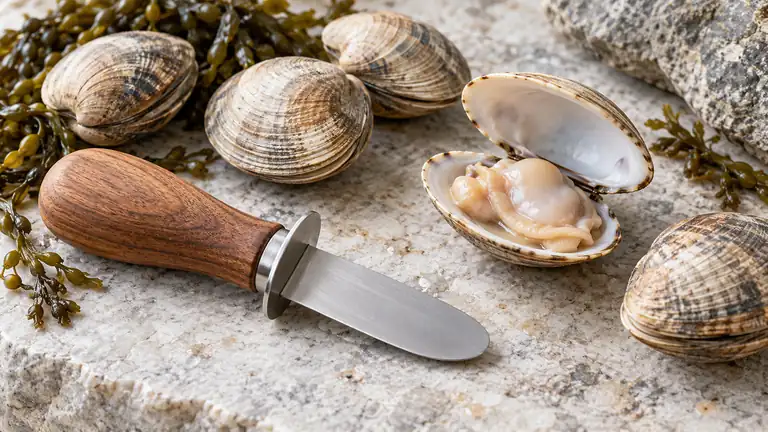
A clam knife earns its place in the kitchen when a regular paring knife feels too delicate and a broad oyster shucker feels awkward. Its short, sturdy blade is built for reaching the shell hinge, cutting the muscle that keeps a clam closed, and lifting the shell without dragging a sharp edge through the meat. That focused job makes blade width, tip shape, handle security, and resistance to wet conditions more useful buying criteria than general kitchen-knife features.
A common mistake is choosing a knife solely by blade length or assuming every seafood shucker works the same way. A narrow three-inch blade favors controlled entry and precision, while a wider blade can offer more shell-opening leverage. Handle material also changes the care routine. Polypropylene and textured synthetic handles are practical around brine and repeated washing, while wood handles offer a traditional grip but need prompt hand washing and drying. Some buyers need one dedicated clam opener for occasional dinners, while others want a heavy-duty tool for clam bakes, raw bars, or outdoor cooking.
The selections below focus on genuine clam knives first, followed by closely related seafood shuckers that can handle clams and add useful safety equipment. The Mercer Culinary 3-1/4-inch Clam Knife stands out as the strongest all-around match because it combines a purpose-built blade, rounded tip, and textured handle with a straightforward maintenance routine.
Quick Answer
Mercer Culinary Clam Knife is the best overall choice for most home cooks because its 3-1/4-inch high-carbon steel blade is made specifically for cutting the muscle inside clam shells, while the rounded tip and textured handle suit wet seafood preparation.
Dexter-Russell S127PCP Sani-Safe Clam Knife is a strong choice for buyers who prefer a narrow blade and a slip-resistant polypropylene handle. Its 3-inch profile favors controlled shell entry and careful separation near the clam meat.
For a clam boil or outdoor seafood station, Fulton Fish Market Heavy Duty Grill Side Clam Knife offers the most task-specific design among the broader tools. Buyers who need protective equipment should look at the SPEENSUN Oyster Shucking Knife Set, which includes two shuckers and a pair of cut-resistant gloves.
Best Clam Knife Comparison Table
| Product | Best For | Blade Style | Handle Or Safety Feature |
|---|---|---|---|
| Mercer Culinary Clam Knife | Best overall | 3-1/4-inch rounded-tip blade | Textured poly handle |
| Dexter-Russell S127PCP Sani-Safe | Precise shell opening | 3-inch narrow blade | Textured polypropylene grip |
| Mercer Culinary Wide Clam Knife | Faster opening with a wider blade | 3-inch wide blade | Textured white handle |
| Dexter-Russell S17 Clam Shucking Knife | Traditional clam shucking | 3-inch carbon steel blade | Riveted beechwood handle |
| Clam Knife With Wooden Handle | Simple home use | 3-1/4-inch stainless steel blade | Blunt tip and wood grip |
| Dexter-Russell S119-PCP | Wide commercial-style clam knife | 3-inch wide blade | Polypropylene handle |
| Fulton Fish Market Grill Side Clam Knife | Clam boils and outdoor prep | Heavy-duty stainless steel design | Ergonomic wet-grip handle |
| SPEENSUN Oyster Shucking Knife Set | Multiple seafood tasks | Two stainless steel shuckers | Pakkawood handles and gloves |
| Rockland Guard Professional Shucking Kit | Protective clam and oyster shucking | 3.5-inch 420 stainless steel blade | Guard and Level 5 gloves |
The detailed reviews explain how each blade shape, handle, and maintenance requirement changes the shucking experience.
1. Mercer Culinary Clam Knife With Poly Handle, 3-1/4-Inch : Best Overall

The Mercer Culinary clam knife is the most direct fit for a buyer searching for a dedicated clam opener. Its 3-1/4-inch high-carbon steel blade is sized for reaching the muscle that holds a clam closed, and the rounded tip provides a more cautious profile than a sharply pointed general-purpose knife. That combination suits the familiar routine of holding a clam securely, working near the hinge, and opening the shell with controlled pressure.
The textured poly handle is especially practical around wet shells, brine, and seafood juices. A secure grip matters because shucking involves force close to the supporting hand, and a slick handle can make a small tool feel unpredictable. Mercer specifies hand washing with mild soap, thorough rinsing, and complete drying. That care routine is less convenient than tossing it into a dishwasher, but it gives the high-carbon blade and handle a better chance of retaining their condition between clam dinners.
Pros
- Purpose-built 3-1/4-inch clam-opening blade.
- Rounded tip provides a more cautious shell-opening profile.
- Textured poly handle is suited to wet hands.
- High-carbon steel construction is documented for the blade.
- Compact size is practical for home seafood preparation.
Cons
- Hand washing and complete drying are recommended.
- The listing does not provide a specific alloy designation.
This knife is the best match for cooks who want one straightforward tool for littlenecks, cherrystones, and similar hard-shell clams. It avoids the extra bulk of a protective kit and the additional maintenance associated with wood handles. Buyers who regularly shuck oysters or want a glove included may prefer one of the broader seafood sets below, but for clam-specific use, the rounded tip and textured handle form a sensible balance.
To buy this product, click here.
2. Dexter-Russell S127PCP Sani-Safe 3-Inch Clam Knife : Best Narrow Blade

The Dexter-Russell S127PCP takes a narrower approach to clam opening. Its 3-inch high-carbon stainless blade is intended to enter the shell with precision, which can be useful when the goal is to cut the closing muscle while disturbing as little of the clam meat as possible. A narrow profile also gives the user a clearer view of the hinge area than a broad blade may provide.
The Sani-Safe handle uses textured polypropylene, a practical choice for a seafood tool that may be wet throughout a long shucking session. The product information identifies it as NSF certified for shellfish and seafood shucking, which may interest buyers setting up a busy prep area as well as home cooks. Its compact proportions make it easier to control near smaller clams, though users who prefer extra leverage may find the narrower blade less reassuring on especially stubborn shells.
Pros
- Narrow 3-inch blade favors controlled shell entry.
- High-carbon stainless construction is identified in the listing.
- Textured polypropylene handle supports a wet grip.
- Purpose-built for shellfish and seafood shucking.
- NSF certification is listed for the product.
Cons
- Narrow geometry may provide less leverage than a wide clam knife.
- The supplied information does not describe a protective hand guard.
This is a strong choice for careful shucking where precision matters more than a broad pushing surface. It fits home cooks who open modest batches and food-service users who value a washable synthetic handle. Someone preparing a large clam bake may prefer the wider Dexter-Russell S119 or the Fulton tool, while a buyer seeking a traditional wood grip will find the S17 more appealing.
To buy this product, click here.
3. Mercer Culinary Wide Clam Knife, 3-Inch : Best Wide Blade

A wide clam knife changes the feel of shell opening by giving the blade more surface area inside the shell. Mercer lists this model with a 3-inch wide blade intended for faster and easier clam opening, making it a natural fit for a family seafood night where several clams need attention in succession. The product information also identifies a honed, high-carbon Japanese steel blade, although it does not provide a specific alloy designation or hardness value.
The textured white handle follows the practical pattern used by many commercial seafood tools. It is easier to hold with damp fingers than a smooth handle, and the short blade keeps the working end close to the hand. Mercer recommends hand washing, rinsing, and drying rather than dishwasher use or prolonged soaking. That is a manageable routine for occasional use, but buyers who want a dishwasher-safe kit should look at the Rockland Guard set instead.
Pros
- Wide 3-inch blade is intended for easier clam opening.
- Honed high-carbon Japanese steel is specified for the blade.
- Textured handle supports control around wet shells.
- Short profile keeps the tool compact for storage.
- Purpose-built design avoids the awkwardness of a general kitchen knife.
Cons
- Wide geometry may feel less precise than a narrow clam blade.
- Hand washing and drying are recommended.
Choose this Mercer when a wider working surface sounds more useful than a narrow entry profile. It is particularly suited to cooks who want to move through a batch without repeatedly repositioning a slim blade. Buyers who work with small clams or prioritize delicate meat separation may prefer the S127PCP, while those who want a wooden handle should look toward the traditional Dexter-Russell S17.
To buy this product, click here.
4. Dexter-Russell S17 3-Inch Clam Shucking Knife : Best Traditional Design
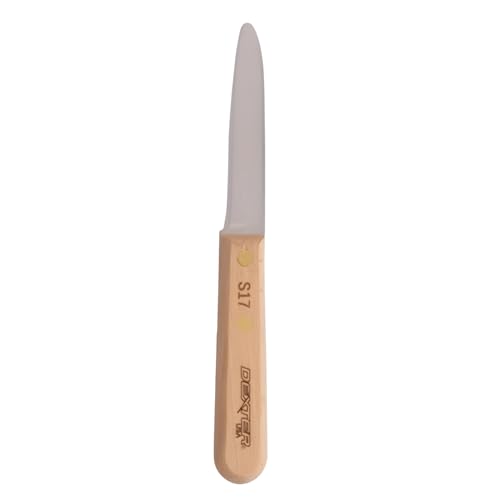
The S17 brings a traditional look to a specialized seafood tool. Its 3-inch DEXSTEEL carbon steel blade is paired with a contoured beechwood handle secured by rivets, creating the kind of construction many buyers expect from a classic clam opener. Dexter-Russell lists it for littlenecks, cherrystones, and other hard-shell clams, so its intended use is clearly narrower and more relevant than a generic oyster knife.
The beechwood handle offers a different maintenance experience from the white synthetic handles in the Mercer and Sani-Safe models. It can be appealing for a seafood table where the visual character of wood matters, but the knife should be hand washed and dried after use to preserve the blade and handle finish. Carbon steel also deserves attentive drying because the supplied information does not describe this blade as stainless. That trade-off is reasonable for users who value traditional construction and are willing to give the tool a little more care.
Pros
- Dedicated 3-inch design for hard-shell clam shucking.
- Documented carbon steel DEXSTEEL blade.
- Riveted beechwood handle offers a traditional grip.
- Contoured handle is intended to support a firm hold.
- Made in the USA according to the supplied product information.
Cons
- Carbon steel and wood require prompt hand washing and drying.
- Wood is less convenient than synthetic handles for prolonged wet prep.
The S17 suits a buyer who enjoys the feel and appearance of a classic clam knife and does not mind drying it immediately after dinner. It makes less sense for a high-volume outdoor station where a synthetic handle and corrosion-focused construction are easier to live with. Compared with the Mercer overall pick, this Dexter-Russell trades simpler care for a more traditional handle and documented carbon steel blade.
To buy this product, click here.
5. Clam Knife With Wooden Handle : Best Blunt-Tip Option

This plainly named clam knife keeps the design familiar: a 3-1/4-inch stainless steel blade, a 7.75-inch overall length, and a wooden handle. The blunt tip is the defining detail for buyers who want to reduce the sharp point at the front of the tool. That does not remove the need for careful handling, but it gives the knife a less pointed profile for the close work involved in opening shells.
The wood handle provides a warmer, more traditional alternative to plastic, while the stainless blade offers a simpler corrosion-maintenance profile than the carbon steel S17. The listing describes the knife as top-rack dishwasher safe, but hand washing is recommended to preserve the wooden handle. That distinction matters in practice. A quick cycle may be permitted, yet gentle washing and complete drying remain the safer long-term habit for wood-handled kitchen tools.
Pros
- 3-1/4-inch stainless steel blade suits clam opening.
- Blunt tip provides a less pointed profile.
- Wooden handle offers a traditional non-slip grip.
- 7.75-inch overall length gives the hand room behind the blade.
- Top-rack dishwasher use is listed, with hand washing recommended.
Cons
- Wood handle needs more care than a polypropylene handle.
- The product information does not identify a specific stainless steel alloy.
This knife fits casual home use, especially for someone who prefers wood and wants a blunt-tip clam opener without a specialized protective kit. It is less suited to a wet commercial station where a synthetic handle is easier to sanitize repeatedly. Compared with the Mercer, the wooden handle changes the care routine, while the stainless blade and blunt tip make it a useful alternative for buyers who value a gentler-looking design.
To buy this product, click here.
6. Dexter-Russell S119-PCP 3-Inch Wide Clam Knife : Best Commercial-Style Wide Knife

The Dexter-Russell S119-PCP is the wide-blade counterpart to the narrower S127PCP. Its 3-inch wide clam-knife format is intended for buyers who want a broader tool for shell opening, while the polypropylene handle suits the damp conditions that accompany seafood preparation. The available information identifies the model as S119-1 and lists package dimensions of 2 by 2 by 8 inches, but it does not provide a detailed blade steel description or a measured knife weight.
That limited specification detail means this model should be selected for its clear shape and handle category rather than for assumptions about metallurgy. A wide blade can feel reassuring when a shell resists, though the added surface may be less nimble around delicate meat than a narrow shucker. The synthetic handle is the more practical feature for repeated cleanup, especially compared with the wood-handled options in this group.
Pros
- Dedicated 3-inch wide clam knife design.
- Polypropylene handle is appropriate for wet seafood work.
- Broad blade profile can suit users who prefer more shell contact.
- Dexter-Russell model identification is supplied.
- Compact package dimensions suggest straightforward storage.
Cons
- The available data does not specify the blade steel.
- Wide profile may offer less fine control than a narrow shucker.
This model makes sense for buyers who already know they prefer a wide clam blade and want a commercial-style synthetic handle. It is a less informative purchase than the Mercer or S127PCP because the supplied specifications leave the steel undescribed. Choose it for the documented form and handle, not for unverified claims about edge retention or durability.
To buy this product, click here.
7. Fulton Fish Market Heavy Duty Grill Side Clam Knife : Best for Outdoor Seafood Prep

The Fulton Fish Market knife is aimed at the lively setting of a backyard clam boil, grill-side seafood table, or high-volume outdoor prep station. Its heavy-duty stainless steel blade structure is presented as a source of leverage for tough shells, while the ergonomic handle is intended to maintain control when hands are wet. That emphasis separates it from the smaller home-oriented clam knives, which focus more on compact precision.
The listing also highlights resistance to rusting, pitting, and dulling in salty outdoor conditions. Those are product claims rather than independent test results, so buyers should still wash and dry the knife after use instead of leaving it beside the grill overnight. The broader, more substantial construction may be welcome when several people are waiting for seafood, but it can feel excessive for someone who opens a few clams at the kitchen counter.
Pros
- Heavy-duty stainless steel construction is aimed at repeated outdoor use.
- Designed around leverage for tough clam shells.
- Ergonomic handle is intended to improve wet-hand control.
- Fits grill-side stations and backyard clam boils.
- Product information addresses salty coastal exposure.
Cons
- Heavier-duty construction may be unnecessary for occasional home use.
- The listing does not provide a specific stainless steel alloy or blade length.
Choose the Fulton when the scene includes a cooler, a steaming pot, and a steady stream of shells rather than a single plated appetizer. It is the most purpose-specific option for outdoor volume, but its broad positioning and limited dimensional information make it less attractive for precision-focused buyers. The Mercer or Dexter-Russell S127PCP is easier to justify for ordinary kitchen storage and smaller batches.
To buy this product, click here.
8. SPEENSUN Oyster Shucking Knife Set : Best Multi-Tool Seafood Set

The SPEENSUN set is broader than a dedicated clam knife, but its stated applications include clams, oysters, mussels, and scallops. It includes two heavy-duty stainless steel shuckers with 3CR14 high-carbon stainless steel blades, Pakkawood handles, and three rivets securing the full-tang construction. For a household that serves mixed shellfish, having two tools ready on the table can be more useful than buying one clam opener and one separate oyster knife.
The included Level 5 cut-resistant gloves add a safety-focused element, though the listing clearly says they are not stab-proof or waterproof. That distinction matters around pointed shells and wet preparation. The Pakkawood handle and oversized protective shield are intended to improve grip and hand positioning, while the gloves can help protect against sharp shell edges. Buyers should still use controlled force and keep the gloves clean and dry according to their care needs.
Pros
- Includes two seafood shucking knives.
- 3CR14 high-carbon stainless steel is identified for the blades.
- Full-tang construction with three rivets is listed.
- Pakkawood handles and protective shields support secure handling.
- Includes Level 5 cut-resistant gloves for shell-edge protection.
Cons
- It is a mixed-seafood shucking set rather than a clam-only knife.
- The gloves are not waterproof or stab-proof.
This set is a sensible choice for hosts who put oysters and clams on the same table or want a spare shucker for a group meal. It may be more equipment than a buyer needs for occasional clam opening, and the glove rating should not be treated as complete protection from every shell hazard. Compared with a single Mercer knife, the SPEENSUN set trades specialized simplicity for two tools and documented protective accessories.
To buy this product, click here.
9. Rockland Guard Professional Oyster Shucking Kit : Best Protective Kit

The Rockland Guard kit combines a 3.5-inch 420 stainless steel shucking knife with a pair of large cut-resistant gloves. Its bent tip is intended to provide leverage when entering and prying shells, and the built-in hand guard creates a physical barrier between the handle area and the supporting hand. Because the tool is marketed for oysters and clams, it qualifies as a useful close-category option for people who want one protective setup for mixed seafood.
The gloves carry a stated EN388 Level 5 rating for cut resistance, and the listing describes the knife and gloves as machine washable and dishwasher safe. That is a clear convenience advantage over wood-handled clam knives, although buyers still need to follow the product’s care directions and understand that cut resistance does not equal puncture protection. The 3.5-inch blade is longer than several dedicated clam knives here, which may provide added reach but can feel less compact in a small kitchen drawer.
Pros
- Includes a 3.5-inch 420 stainless steel shucking knife.
- Bent tip is designed to provide shell-opening leverage.
- Built-in hand guard adds a physical handling barrier.
- Large gloves carry a stated EN388 Level 5 cut-resistance rating.
- Knife and gloves are listed as machine washable and dishwasher safe.
Cons
- Large gloves may not fit users with smaller hands.
- The 3.5-inch blade is less compact than the dedicated clam knives.
Pick this kit if hand protection and easy cleanup matter as much as the knife itself. It is especially useful for a first-time shellfish host who does not already own a shucking glove, though the large glove size deserves attention before purchase. Buyers who want a precise, compact clam opener with no extra equipment will be better served by the Mercer or Dexter-Russell S127PCP.
To buy this product, click here.
Buying Guide
Match the Blade Width to the Shell-Opening Motion
A narrow clam knife gives the user a focused working edge for entering near the hinge and cutting the closing muscle. That can help when preserving the meat is the priority. A wide blade spreads contact across more of the shell interior and may feel more stable when a batch includes stubborn shells. Neither profile is universally superior. The S127PCP and Mercer 3-1/4-inch model favor controlled dedicated work, while the Mercer Wide and Dexter-Russell S119 suit buyers who prefer a broader tool.
Choose a Tip Shape That Fits Your Handling Preferences
Rounded and blunt tips can reduce the sharp point presented near the hand, but they do not make shellfish shucking risk-free. A bent tip on a broader oyster-style tool can increase leverage, while a blunt-tip clam knife may feel more reassuring for a home cook opening a few shells at the counter. Keep the supporting hand behind the handle and use a stable surface rather than relying on the tip shape alone.
Decide Between Synthetic and Wood Handles
Polypropylene and textured poly handles are practical for wet preparation, repeated washing, and outdoor seafood service. The Mercer and Dexter-Russell Sani-Safe models reflect that approach. Wood handles such as those on the S17 and the unnamed clam knife offer a traditional appearance and grip, but hand washing and prompt drying are better habits. A clam knife that sits wet beside a sink or grill needs more care than one washed immediately after serving.
Read Steel Claims Conservatively
Several products identify high-carbon steel or high-carbon stainless steel, while the S17 specifically lists DEXSTEEL carbon steel and the Rockland Guard lists 420 stainless steel. Those descriptions provide useful material information, but they do not establish a precise hardness, edge life, or cutting superiority. A clam knife works through blade shape, leverage, hand control, and appropriate maintenance as much as through the steel label.
Think About Batch Size and Setting
For a quiet kitchen dinner, a compact three-inch clam knife is easy to store and control. A backyard clam boil creates different demands. Wet hands, repeated opening, and several people waiting for food make a secure synthetic handle and substantial construction more appealing. The Fulton is aimed at that outdoor setting, while the SPEENSUN and Rockland Guard kits add multiple tools or hand protection for mixed shellfish gatherings.
Plan for Cleaning and Storage
Rinse seafood residue from the blade after use, wash according to the product instructions, and dry the knife fully before storing it. Wood-handled products should receive particular attention because prolonged moisture can affect the handle finish. A clam knife belongs in a protected drawer, utensil holder, or other location where the blade cannot contact loose hands during retrieval. Gloves should also be cleaned and dried before being stored with the knife.
Best Clam Knife FAQ
What type of knife is best for opening clams?
A dedicated clam knife with a short, sturdy blade is the most direct choice. Narrow models favor precise entry near the hinge, while wide models can provide a broader working surface and a stronger feeling of leverage. A general paring knife is a poor substitute because its blade and handle are intended for different cutting motions.
How long should a clam knife blade be?
The products in this guide use blades from about 2.75 to 3.5 inches, with many dedicated clam knives near three inches. That range keeps the blade compact while providing enough reach to work inside a shell. A longer blade may be useful for broader seafood tasks, but it is not automatically easier to control.
Is a wide or narrow clam knife better?
A narrow knife can give more precise access to the hinge and closing muscle. A wide knife may feel more stable and can suit buyers opening many shells in succession. Select based on the motion you prefer rather than assuming width alone determines performance.
Can an oyster knife be used for clams?
Some oyster knives and seafood shuckers are also listed for clam use, including the SPEENSUN and Rockland Guard kits. Their bent tips, guards, or broader shapes may work well for mixed shellfish. A dedicated clam knife remains the more focused choice if clams are the only food you plan to open.
Should a clam knife be stainless steel?
Stainless steel can simplify corrosion care around salty seafood, but the exact alloy and construction still matter. Carbon steel models can also be suitable, provided they are washed and dried promptly. Do not treat the word stainless as a guarantee that a knife can be left wet or neglected.
Are cut-resistant gloves necessary for clam shucking?
Gloves are optional, but they can add protection from sharp shell edges, especially for beginners or people preparing a large batch. The Rockland Guard gloves carry a stated EN388 Level 5 cut-resistance rating, while the SPEENSUN listing describes its gloves as cut-resistant. Neither product describes the gloves as stab-proof, so controlled technique remains necessary.
Oyster and clam tools should not be treated as automatically interchangeable. The oyster-shucking guide describes the oyster-specific hinge approach so that difference remains clear.
Can clam knives go in the dishwasher?
Care instructions vary. Mercer recommends hand washing and drying, and the wood-handled options are better treated gently even where limited dishwasher use is listed. The Rockland Guard kit is described as dishwasher safe. Check the exact product instructions and avoid prolonged soaking, especially with wood handles or unspecified blade materials.
Final Verdict
The Mercer Culinary 3-1/4-inch Clam Knife is the best overall match for most buyers searching for a dedicated clam opener. Its purpose-built blade, rounded tip, textured poly handle, and clear hand-washing instructions address the central needs of shellfish preparation without adding unnecessary equipment. The Dexter-Russell S127PCP is the better alternative for narrow-blade precision, while the Mercer Wide Clam Knife suits buyers who prefer a broader opening surface.
For traditional construction, the Dexter-Russell S17 pairs a documented carbon steel blade with a riveted beechwood handle, provided the owner is willing to wash and dry it carefully. The Fulton is the stronger fit for outdoor clam boils and repeated grill-side work. Buyers who place protective equipment first should choose between the SPEENSUN set and Rockland Guard kit, keeping glove sizing and the limits of cut resistance in mind. Match the knife to your shell size, preferred blade width, cleaning routine, and intended volume, then store it securely after every seafood session.
