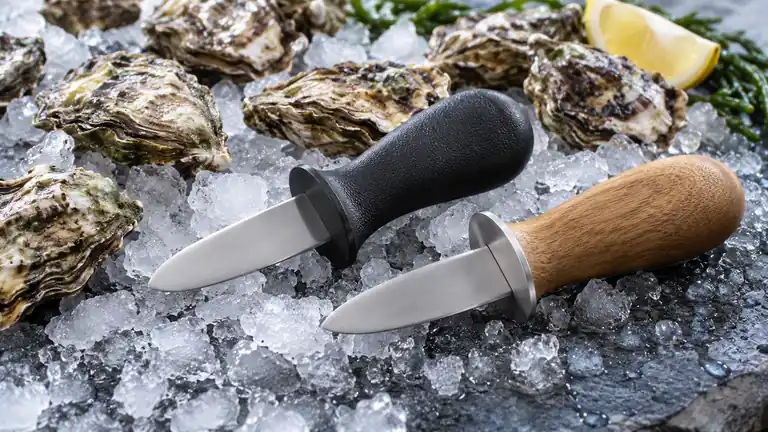
Opening an oyster is a small task with a surprisingly narrow margin for error. A straight kitchen knife can skate across a wet shell, while a flimsy opener may flex before the hinge gives way. The best oyster knife uses a short, sturdy blade with a tip shaped for the hinge, plus a handle that stays secure when your fingers are cold, wet, or slick with seawater. That combination matters for weekend raw bars, holiday seafood platters, and anyone shucking more than a few oysters at a time.
Many buyers focus on blade sharpness and overlook leverage, hand protection, and cleanup. Oyster knives are primarily prying tools, so a rigid blade and controlled tip are usually more useful than a long slicing edge. Handle shape also changes the experience. A compact New Haven-style knife offers concentrated leverage, while a longer knife or full-tang design may give more reach and stability on stubborn shells. Stainless steel simplifies care, while carbon steel can require more attention after exposure to saltwater.
The right choice depends on your oysters, your shucking frequency, and whether you already own protective gloves. This guide compares traditional shuckers, stainless steel models, folding designs, premium construction, and complete glove-and-knife kits. The Dexter-Russell Sani-Safe stands out as the strongest all-around match because its short bent tip, textured handle, and focused leverage suit both home use and repeated seafood preparation.
Quick Answer
- Dexter-Russell Sani-Safe New Haven Oyster Knife is the best overall choice for its compact 2.75-inch carbon steel bent-tip blade and slip-resistant handle.
- Toadfish Oyster Knife is a strong alternative for buyers who want a full-tang stainless steel knife with a thumb rest and contoured grip.
- Dalstrong Shogun Series Elite Oyster Knife suits shoppers seeking a premium 3.5-inch knife with AUS-10V steel, a G10 handle, and a sheath.
- Rockland Guard Professional Oyster Shucking Kit is a practical choice for beginners who need both a shucker and cut-resistant gloves.
Best Oyster Knife Comparison Table
| Product | Best For | Blade And Construction | Grip Or Included Gear |
|---|---|---|---|
| Dexter-Russell Sani-Safe | Overall use | 2.75-inch carbon steel bent tip | Textured non-slip handle |
| OXO Good Grips | Comfortable home shucking | Stainless steel bent tip | Soft non-slip handle |
| Dalstrong Shogun Series Elite | Premium construction | 3.5-inch AUS-10V full tang | G10 handle and sheath |
| R. Murphy Duxbury | Traditional stainless design | Pointed stainless steel tip | Polypropylene handle |
| Opinel No.09 Folding | Portability | Stainless steel folding blade | Padouk handle and locking ring |
| WENDOM Shucking Set | Starter kit and parties | 3CR13 stainless steel knives | Two knives, gloves, cloth, squeezer |
| Rockland Guard Kit | Hand protection | 3.5-inch 420 stainless steel blade | Level 5 gloves and hand guard |
| Toadfish Oyster Knife | Controlled hinge work | Full-tang stainless steel blade | Thumb rest and contoured grip |
| Mercer Boston Style | Simple traditional use | 3-inch high-carbon steel blade | Textured poly handle |
The detailed reviews below show how each knife handles leverage, grip, portability, maintenance, and protective equipment.
1. Dexter-Russell Sani-Safe 2.75-Inch New Haven Oyster Knife – Best Overall

The Dexter-Russell Sani-Safe takes the classic New Haven approach: a short, curved carbon steel blade that concentrates force near the oyster hinge. A 2.75-inch blade is compact enough for close control, yet sturdy enough to pry rather than slice. That is the useful distinction for a home raw bar. You are looking for a tip that seats in the hinge and a blade that transfers pressure without feeling like a thin kitchen utensil.
Its textured Sani-Safe handle gives the knife a practical food-service character. Wet hands are part of the job, and a pronounced grip surface can help keep the knife from rotating as the shell begins to open. The available specifications describe the knife for both commercial and home use, but the carbon steel construction means drying deserves attention after rinsing. For a family gathering where several dozen oysters need opening, this is the sort of focused tool that avoids unnecessary bulk.
Pros
- Short 2.75-inch blade concentrates leverage near the hinge.
- Curved New Haven tip is shaped for controlled shell entry.
- Textured handle supports a secure grip with wet hands.
- Carbon steel construction provides a sturdy dedicated shucking blade.
- Compact format suits home kitchens and raw-bar preparation.
Cons
- Carbon steel requires prompt rinsing and thorough drying after use.
- Short specialized blade is less suitable for buyers who prefer a longer reach.
This is the best fit for shoppers who want a traditional oyster opener without extra accessories or a large handle. It also makes sense for frequent home shuckers who value a compact blade that feels purposeful rather than multipurpose. Buyers who dislike maintaining carbon steel may prefer one of the stainless options below, especially for beach trips or damp storage conditions.
To buy this product, click here.
2. OXO Good Grips Stainless Steel Oyster Knife – Best for Comfortable Home Shucking

OXO approaches the oyster knife from the handle outward. Its stainless steel bent blade provides the basic hinge-opening shape, while the soft Good Grips handle is intended to remain secure in wet conditions. That combination is appealing for a casual host who may start with six oysters and end up opening several dozen as guests gather around the kitchen island.
The ergonomic design is also aimed at reducing hand strain during repeated shucking. That does not make the knife medically suitable for every user, and individual hand comfort will vary, but the softer handle and non-slip surface are sensible features for a tool that requires controlled pressure. Stainless steel simplifies cleanup compared with a carbon steel blade, although rinsing and drying after contact with saltwater remain sensible habits.
Pros
- Stainless steel blade is suited to routine seafood cleanup.
- Bent tip supports hinge entry and prying.
- Soft handle offers a less abrasive grip during repeated use.
- Non-slip surface is useful around wet shells and brine.
- Ergonomic format suits casual home entertaining.
Cons
- The available information does not specify the blade length.
- Its softer handle may appeal less to buyers seeking a traditional rigid food-service grip.
Choose the OXO if comfort and approachable handling matter more than a distinctly traditional pattern. It is especially suitable for occasional shuckers who want stainless steel and a handle that feels less austere than a molded commercial tool. Those opening very large or stubborn oysters may prefer a thicker, longer knife with more explicitly documented leverage.
To buy this product, click here.
3. Dalstrong Shogun Series Elite Oyster Knife – Best Premium Construction

The Dalstrong Shogun Series Elite is the most substantial knife in this group. Its 3.5-inch blade is made from Japanese AUS-10V steel according to the supplied product information, and the full-tang construction runs through a G10 handle. A wide, reinforced blade gives this model a different character from short New Haven shuckers. It offers more working length and a long handle for leverage, which may suit difficult shells or users who prefer a larger tool in the palm.
The pointed tip is intended to enter tight shell junctions, while the thick blade is described as supporting prying without tearing the oyster meat. The G10 handle is resistant to the moisture associated with seafood preparation, and the included sheath makes drawer storage more controlled. This is a premium purchase with a specialized purpose, so its larger dimensions may feel excessive for someone who opens a small plate of oysters twice a year.
Pros
- Documented AUS-10V steel gives the blade a specific material identity.
- 3.5-inch reinforced blade provides more reach than compact shuckers.
- Full-tang construction connects the blade through the G10 handle.
- Pointed tip is intended for tight shell entry.
- Included sheath supports protected storage.
Cons
- Longer, larger format may feel cumbersome for small hands or light use.
- Premium construction is unnecessary for buyers who want a simple occasional-use opener.
This knife suits committed oyster enthusiasts, frequent hosts, and buyers who want a giftable tool with more elaborate construction. It may also appeal to people who prefer a longer handle for leverage. Skip it if your priority is a compact shucker that can live in a crowded utensil drawer, or if you would rather spend less on a straightforward stainless model.
To buy this product, click here.
4. R. Murphy Duxbury Oyster Knife – Best Traditional Stainless Design
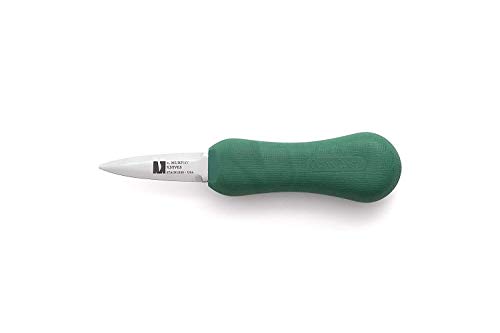
The Duxbury model has a strong connection to the traditional oyster-shucking format. Its design was developed with oystermen at Island Creek Oysters in Duxbury, Massachusetts, according to the supplied listing, and it combines a pointed stainless steel blade with a Murphy Green polypropylene handle. The pointed tip is intended to enter the hinge with limited force, which is useful for a buyer who wants a direct, uncomplicated tool for shellfish preparation.
Stainless steel and polypropylene make this a practical choice for a damp seafood station. The handle is tough rather than luxurious, with a shape aimed at firm control. That makes sense beside a tray of oysters, where a knife needs to be rinsed, wiped, and put back to work. The design also extends to clams and other shellfish, although it remains a specialized opener rather than a general kitchen knife.
Pros
- Stainless steel blade is appropriate for repeated seafood cleanup.
- Pointed tip is intended to ease hinge entry.
- Polypropylene handle is durable and practical for wet work.
- Design was developed with oystermen at Island Creek Oysters.
- Suitable for oysters, clams, and related shellfish tasks.
Cons
- The available information does not specify the blade length.
- Hard polypropylene may feel less cushioned than a soft-grip handle.
The Duxbury is a good match for someone who prefers a traditional seafood tool with stainless construction and a straightforward handle. It has less accessory clutter than a kit and a more purpose-built identity than a general kitchen implement. Buyers seeking a thumb rest, full-tang construction, or an included sheath should look at the Toadfish or Dalstrong instead.
To buy this product, click here.
5. Opinel No.09 Folding Oyster and Shellfish Knife – Best Portable Design

The Opinel No.09 brings a pocket-knife format to shellfish preparation. Its stainless steel blade folds into a Padouk handle, and the Virobloc safety ring has fixed and sliding sections for locking the blade. That folding mechanism changes the storage equation. A camper, angler, or picnic host can carry the tool with the blade enclosed rather than placing a fixed shucker loose in a bag.
The blade uses Sandvik 12C27 modified stainless steel according to the supplied product information. The wood handle gives the knife a more traditional visual character than molded polypropylene or G10, though wood deserves sensible drying and storage after exposure to water. Folding construction also means the hinge and locking mechanism become part of the ownership routine. This model is best viewed as a portable shellfish tool, not the first choice for high-volume raw-bar service.
Pros
- Folding format protects the blade during transport.
- Virobloc ring provides a defined locking mechanism.
- Stainless steel blade suits shellfish use and routine cleanup.
- Padouk handle offers a distinctive traditional appearance.
- Useful for picnics, travel, and compact storage.
Cons
- Folding construction introduces a mechanism that needs careful cleaning and drying.
- Portable format is less suited to rapid, high-volume shucking.
Choose the Opinel when portability matters as much as opening performance. It fits a seafood picnic or travel kit far better than a fixed-blade restaurant tool. Buyers who primarily shuck at home beside a sink may prefer a fixed handle with no folding joint to maintain, especially if they want the simplest possible cleanup routine.
To buy this product, click here.
6. WENDOM Oyster Knife Shucker Set – Best Starter Set

The WENDOM set is aimed at buyers who need more than a knife. It includes two oyster knives, a pair of cut-resistant gloves, an anti-slip cloth, and a lemon squeezer. The two-knife configuration is useful for a dinner party or a household where more than one person will help with preparation. It also gives a beginner a spare tool rather than requiring a second purchase after the first shucking session.
The knives use 3CR13 stainless steel and have textured handles, according to the supplied information. The included gloves are described as Level 5 cut-resistant protection, but cut-resistant does not mean stab-proof or invulnerable. Fit also matters, especially if the gloves are shared. This set is best for a first oyster station where protective equipment and serving accessories are currently missing.
Pros
- Includes two oyster knives for shared preparation.
- Provides a pair of cut-resistant gloves with the tools.
- 3CR13 stainless steel is identified in the product information.
- Textured handles support control around wet shells.
- Cloth and lemon squeezer add useful serving accessories.
Cons
- Included gloves are cut-resistant, not stab-proof or waterproof.
- Extra accessories may be unnecessary for buyers who already own protective gear.
This is the practical pick for a first-time shucker assembling a complete setup for a party, barbecue, or holiday meal. It also works as a gift where two people may open oysters together. Buyers who want one refined, durable knife rather than a bundle should choose the Dexter-Russell, Toadfish, or Duxbury instead.
To buy this product, click here.
7. Rockland Guard Professional Oyster Shucking Kit – Best for Hand Protection

The Rockland Guard kit puts protective equipment at the center of the purchase. It combines a 3.5-inch 420 stainless steel oyster knife with a pair of large gloves described as EN388 Level 5 cut-resistant. The knife has a reinforced bent tip, textured handle, and built-in hand guard. Those features address the moment a shell resists and the opener needs firm pressure without the hand sliding toward the blade.
The 3.5-inch length gives this knife more reach than compact New Haven designs, while the rigid stainless construction is intended for leverage. The large glove size is a significant fit detail. A glove that is too loose can reduce control, so buyers with smaller hands should check whether the supplied size suits them. The listing describes the knife and gloves as machine washable, but drying the knife and checking the glove condition after use remains sensible.
Pros
- Includes a 3.5-inch 420 stainless steel oyster knife.
- Reinforced bent tip is intended for leverage at the hinge.
- Built-in hand guard adds a physical barrier near the handle.
- Includes EN388 Level 5 cut-resistant gloves.
- Knife and gloves are described as machine washable.
Cons
- Large gloves may not fit users with smaller hands securely.
- Cut-resistant gloves do not eliminate puncture or handling risks.
Pick this kit if hand protection is a priority and the large glove size is appropriate. It is a sensible starting point for someone who feels uneasy handling oysters, particularly during a first large gathering. Buyers who already own well-fitting protective gloves may get more value from a standalone knife with a more specialized handle.
To buy this product, click here.
8. Toadfish Oyster Knife – Best for Controlled Hinge Work

The Toadfish focuses on hand position and force transfer. Its bent tip is intended to seat in the hinge, while the full-tang blade runs through the handle so prying force travels through a continuous piece of steel. A molded thumb rest and contoured grip give the user defined contact points. That design can be useful during a long afternoon of shucking, when a wet, cold hand tends to drift away from its initial position.
The rust-resistant stainless steel blade is sharpened along both sides according to the supplied information, with the aim of separating the adductor muscle cleanly. The product is listed for East Coast and Pacific oysters, plus littleneck and cherrystone clams. It therefore has a clearly defined range of shellfish applications. Buyers looking for a kit will need to supply gloves separately, and those who work with especially large Gulf oysters may prefer a thicker dedicated model.
Pros
- Bent tip is shaped for hinge entry and leverage.
- Full-tang construction runs through the handle.
- Thumb rest helps establish a consistent hand position.
- Rust-resistant stainless steel suits wet seafood preparation.
- Listed for oysters and several clam varieties.
Cons
- Protective gloves are not included.
- The available information does not specify the blade length.
This is a strong choice for buyers who care about grip architecture more than included extras. The thumb rest and contoured handle distinguish it from basic molded shuckers, while the stainless blade keeps maintenance relatively straightforward. Choose another model if you need gloves in the same package or want a short 2.75-inch blade for very close leverage.
To buy this product, click here.
9. Mercer Culinary Boston Style Oyster Knife – Best Simple Traditional Option

The Mercer Culinary Boston-style knife keeps the layout familiar: a 3-inch blade, a poly handle, a textured grip, and a rounded tip. Its high-carbon steel blade has ground edges intended for opening oysters and separating them from the shell. The rounded tip gives the tool a less pointed profile than some hinge-focused knives, which may appeal to someone who prefers a traditional Boston-style opener for routine home use.
The handle is designed for wet-hand control, but maintenance is more demanding than the stainless models in this roundup. The supplied care instructions call for hand washing with warm water and mild soap, followed by complete drying, and advise against dishwasher use or prolonged submersion. That is a clear ownership requirement. A seafood host who cleans tools immediately after serving can manage it easily, while a buyer seeking quick dishwasher cleanup should look elsewhere.
Pros
- 3-inch blade offers a compact dedicated shucking format.
- High-carbon steel blade material is identified in the listing.
- Rounded tip supports a traditional Boston-style design.
- Textured poly handle helps with wet-hand control.
- Care instructions clearly specify hand washing and drying.
Cons
- Hand washing is required, with dishwasher use discouraged.
- High-carbon steel needs more careful drying after seafood preparation.
The Mercer is a sensible fit for a buyer who wants a straightforward Boston-style knife and does not need a sheath, gloves, or premium handle material. Its maintenance instructions should be treated as part of the purchase rather than a footnote. If your cleanup routine often ends with tools in the dishwasher, select a stainless model with care guidance that better matches that habit.
To buy this product, click here.
Buying Guide
Match the Tip to the Hinge
Oyster knives are built around leverage, so the tip should be shaped for the shell’s hinge rather than treated like a miniature chef’s knife. Bent or curved tips, such as those on the Dexter-Russell, OXO, and Toadfish, are intended to seat in the hinge and help turn the shell. Pointed tips, such as the Duxbury’s, emphasize entry into a tight junction. A straight blade that is too thin can slide across a wet shell, which is why a dedicated shucker is preferable to an ordinary kitchen knife.
Choose Blade Length for Control or Reach
Short blades around 2.75 to 3 inches keep the working area close to the hand and can feel controlled during ordinary home shucking. Longer 3.5-inch models, including the Dalstrong and Rockland Guard, offer more reach and a longer lever, which may suit stubborn shells or users who prefer a larger grip. Longer does not automatically mean safer or easier. The correct length depends on hand size, oyster size, and whether you want close hinge control or additional reach.
Compare Stainless and Carbon Steel Care
Stainless steel generally makes sense for a wet seafood tool because it is intended to resist corrosion, though it should still be rinsed and dried after use. Carbon steel models such as the Dexter-Russell and Mercer require more attention after contact with saltwater. The Mercer listing specifically advises hand washing, complete drying, and avoiding prolonged submersion. A buyer who cleans tools immediately may have no issue with that routine, while a busy host may prefer a stainless option.
Look Closely at Handle Security
A secure handle matters because oyster shells, brine, and gloves can all reduce traction. Textured polymer handles offer a practical food-service grip, while soft OXO material emphasizes cushioning. The Toadfish adds a thumb rest and contoured shape, and the Dalstrong uses G10 with full-tang construction. These features suggest different handling priorities, but comfort remains personal. Pay attention to handle size, thumb placement, and whether you will use the knife bare-handed or with a glove.
Decide Whether You Need Protective Equipment
A standalone oyster knife is appropriate if you already own suitable gloves and understand how to stabilize the shell. A kit can simplify the first purchase. The WENDOM set includes two knives and several serving accessories, while the Rockland Guard kit pairs one 3.5-inch knife with large EN388 Level 5 cut-resistant gloves. Cut-resistant gloves are not stab-proof, and a loose glove can interfere with control. Fit and handling technique remain part of the safety equation.
Plan for Storage and Cleanup
Fixed-blade knives need a secure drawer position, sheath, or other protected storage. The Dalstrong includes a sheath, while the Opinel folds and locks for transport. Folding storage is convenient for picnics and travel, but the hinge requires attention during cleaning. After shucking, rinse away shell grit and salt, follow the product’s care instructions, and dry the blade and handle before storage. These simple steps matter more than a decorative finish.
Best Oyster Knife FAQ
What type of blade is best for opening oysters?
A short, sturdy blade with a bent, curved, or purpose-shaped tip is generally the most suitable starting point. The tip needs to enter or seat near the hinge, while the blade must tolerate controlled prying. A long slicing knife is a poor substitute because its edge and balance are intended for cutting rather than shell leverage.
A purpose-built tool still needs correct positioning. The oyster-shucking method explains the stable surface, shell orientation, and controlled opening movement.
Is a pointed oyster knife better than a rounded one?
Neither profile is universally superior. A pointed tip may help enter a tight hinge, while a rounded or curved design can provide a broader contact area during leverage. The Dexter-Russell uses a curved New Haven-style tip, the Duxbury uses a pointed tip, and the Mercer uses a rounded Boston-style tip. Your preferred oyster size, hand position, and shucking method should guide the choice.
Should an oyster knife be sharp?
An oyster knife needs a functional working edge, but it is primarily a leverage tool rather than a slicing knife. A blade that is too sharp can create unnecessary handling concerns, while a dull or poorly shaped tip may skate across the shell. Follow the manufacturer’s care guidance and avoid treating the opener like a general-purpose kitchen knife.
Are stainless steel oyster knives rust-proof?
No steel should be treated as completely immune to corrosion. Stainless models are generally more convenient around moisture than carbon steel models, but salt, shell residue, and prolonged damp storage can still create problems. Rinse the knife after use, dry it fully, and follow the specific cleaning instructions. The Mercer listing, for example, advises hand washing and complete drying.
Do I need cut-resistant gloves for shucking oysters?
Gloves can add a layer of protection and improve confidence, especially for beginners, but they do not remove the need for controlled handling. The WENDOM and Rockland Guard sets include cut-resistant gloves, with the latter listing an EN388 Level 5 rating. That rating should not be interpreted as puncture-proof protection. Fit matters as well, since loose gloves can reduce grip control.
Can I put an oyster knife in the dishwasher?
Follow the exact product instructions rather than assuming all oyster knives share the same care requirements. The Mercer listing specifically says to hand wash and avoid the dishwasher. The Rockland Guard listing describes the knife and gloves as machine washable. Carbon steel and wood-handled tools generally deserve particular attention to prompt drying.
What is the safest way to store an oyster knife?
Store a fixed-blade shucker where the blade cannot contact loose utensils or hands. A sheath, protected drawer position, or dedicated storage area can help. The Dalstrong includes a sheath, while the Opinel’s folding blade and locking ring support portable storage. Keep the knife clean and dry before enclosing it, especially after exposure to saltwater.
Final Verdict
The Dexter-Russell Sani-Safe is the best overall oyster knife in this selection because its compact 2.75-inch New Haven blade focuses leverage where it is needed, while the textured handle addresses wet-hand control. It is a straightforward tool for home shucking, seafood platters, and repeated preparation without the bulk of a larger premium knife. The main trade-off is carbon steel care, so rinse and dry it promptly after use.
Choose the Toadfish if a thumb rest, contoured grip, and full-tang stainless construction matter more than included accessories. The Dalstrong is the premium alternative for buyers who prefer a longer AUS-10V blade, G10 handle, and sheath. Beginners who need protective gear should look at the Rockland Guard or WENDOM kits, while the Opinel makes the most sense for travel. Match the knife to your hand size, oyster type, storage habits, and willingness to maintain the blade, and the shucking experience becomes considerably more controlled.
