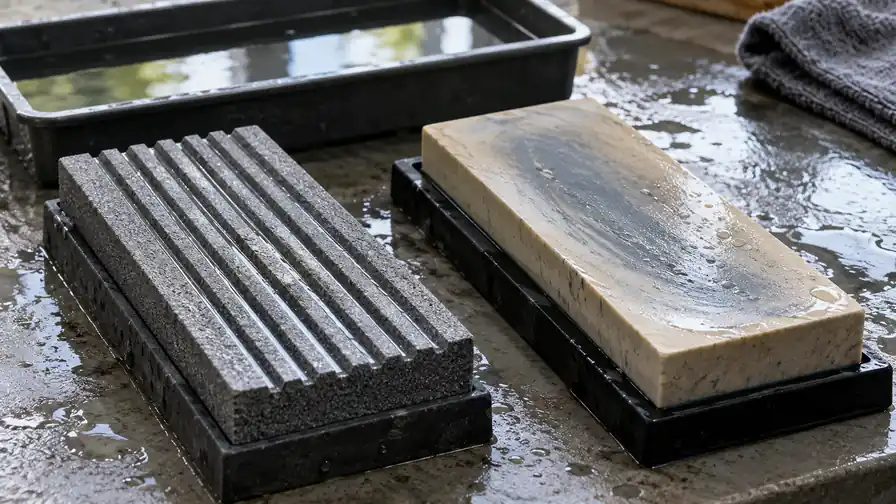
A flattening stone is the quiet piece of sharpening equipment that keeps a waterstone useful. After repeated knife sharpening, a waterstone gradually wears into a shallow hollow. The knife then contacts the stone unevenly, making consistent sharpening harder and encouraging an inconsistent edge. A proper flattener restores a level surface, whether you maintain kitchen waterstones, oil stones, ceramic stones, or larger bench stones.
The main mistake is choosing by grit number alone. A coarse silicon carbide stone can remove material quickly from a badly dished stone, while a diamond lapping plate may offer a harder, more stable surface for demanding maintenance. Dimensions matter too. A short flattener can leave you working in sections, whereas a longer plate makes it easier to cover a full-size sharpening stone evenly. Grooves or channels also have a practical purpose because they carry away slurry instead of letting waste clog the abrasive surface.
Different sharpeners have different priorities. A home cook may prefer a dual-grit tool that handles routine maintenance without adding another accessory, while someone maintaining fine Japanese waterstones may place greater value on flatness, surface consistency, or a large diamond plate. The products below include compact flatteners, dual-grit silicon carbide stones, dedicated Japanese options, and diamond plates for more specialized work.
Quick Answer
Sharp Pebble Dual-Grit Flattening Stone is the strongest all-around choice because it combines a large 8-inch working surface with 120/320 grits and slurry-clearing grooves. It covers routine flattening across coarse and fine sharpening stones without requiring two separate flatteners.
SHARPAL 145H is the more specialized alternative for buyers who prioritize a precision-ground diamond plate, a broad 10 x 4-inch surface, and a stable rubber base. Its single 220-grit surface is less flexible than a dual-grit stone, but its published flatness specification makes it especially appealing for careful stone maintenance.
For a traditional waterstone setup, Norton Waterstone Flatstone includes a holder and storage case, while Naniwa IO-1142 offers a compact Japanese 220-grit straightening option.
Best Flattening Stone Comparison Table
| Product | Best For | Grit | Abrasive Type | Notable Feature |
|---|---|---|---|---|
| Sharp Pebble Flattening Stone | Overall maintenance | 120/320 | Silicon carbide | 8-inch dual-grit surface |
| SHARPAL 145H | Precision lapping | 220 | Diamond | 10 x 4-inch plate and rubber base |
| Norton Waterstone Flatstone | Complete waterstone setup | Coarse | Silicon carbide | Holder and case included |
| Naniwa IO-1142 | Japanese waterstones | 220 | Not specified | Dedicated straightening stone |
| POWERTEC Large Flattening Stone | Large sharpening stones | 120/320 | Silicon carbide | 8 x 3-inch surface |
| Shun Leveling Stone | Routine Japanese-style maintenance | Not specified | Not specified | Ridged surface and grooves |
| Atoma Diamond Plate #1200 | Fine finishing work | 1200 | Diamond | 10.6 x 4.3-inch plate |
| SCOTTCHEN Diamond Flattening Stone | Long-format lapping | 120/180 | Diamond | 10-inch double-sided plate |
| Angerstone Dual-Grit Set | Two-stage flattening | 150/320 | Silicon carbide | Separate coarse and fine stones |
The detailed reviews below focus on abrasive configuration, working dimensions, groove design, setup, and the type of sharpening-stone maintenance each product suits.
1. Sharp Pebble Flattening Stone — Best Overall

The Sharp Pebble earns the top position by covering the most common flattening jobs with one tool. Its 120-grit side is intended for coarser waterstones rated at 900 grit or below, while the 320-grit side is aimed at finer stones from 1,000 grit upward. That split gives a home sharpener a sensible way to remove a noticeable hollow first, then use a less aggressive surface when maintaining a finer stone.
The nearly 8-inch working length is useful at the sink, where a small flattener can feel like rubbing a large stone with a postage stamp. Diamond-shaped grooves help carry away slurry and removed abrasive material. The product is made from silicon carbide and is described for waterstones, oil stones, and ceramic stones. Buyers should still match the chosen side to the sharpening stone rather than treating the two grits as interchangeable.
Pros
- Dual 120/320-grit configuration covers coarse and fine maintenance.
- Nearly 8-inch surface suits many full-size sharpening stones.
- Grooves provide channels for slurry and removed material.
- Silicon carbide is suited to routine stone flattening.
- Listed for waterstones, oil stones, and ceramic stones.
Cons
- Silicon carbide may wear differently from a dedicated diamond lapping plate.
- The 120-grit side can be unnecessarily aggressive for delicate fine-stone maintenance.
This is the most practical starting point for a kitchen sharpener who owns several waterstones and wants one flattener for ordinary upkeep. It is also a strong fit for someone who would rather rinse slurry away at the sink than pause to clear a smooth surface repeatedly. Buyers focused on tightly controlled lapping of expensive, very hard stones may prefer the SHARPAL plate, but the Sharp Pebble offers a broader day-to-day setup.
To buy this product, click here.
2. SHARPAL 145H 10 x 4 Inch Diamond Lapping Plate — Best for Precision Lapping

The SHARPAL 145H takes a more specialized approach than the dual-grit silicon carbide flatteners. It uses a 220-grit monocrystalline diamond surface and lists a precision-ground flatness of plus or minus 0.002 inch. That published specification gives this plate a clear appeal for sharpeners who place a high priority on a consistent reference surface rather than simply removing stone material quickly.
Its 10 x 4-inch format provides generous coverage for broad waterstones and larger tools. The plate also has a rubber base, which can make wet flattening more controlled by reducing movement on the work surface. The trade-off is simplicity. There is one listed grit rather than a coarse/fine pair, so buyers must be comfortable using a 220-grit surface for their intended maintenance routine.
Pros
- Large 10 x 4-inch working area covers broad sharpening stones.
- Published flatness specification supports precision-focused maintenance.
- Monocrystalline diamond abrasive is intended for fast lapping.
- Rubber base helps stabilize the plate during wet work.
- 220 grit can handle general flattening and coarse stone maintenance.
Cons
- Single-grit design offers less flexibility than dual-grit flatteners.
- Its larger format may take more storage space than a compact stone.
This plate makes the most sense for a dedicated sharpening station where consistency matters more than having multiple grit choices in one piece. A user maintaining wide stones or working with a range of synthetic and natural stones may appreciate the extra surface. Someone flattening only an occasional kitchen waterstone may find a simpler silicon carbide model easier to justify.
To buy this product, click here.
3. Norton Waterstone Flatstone — Best Complete Waterstone Accessory
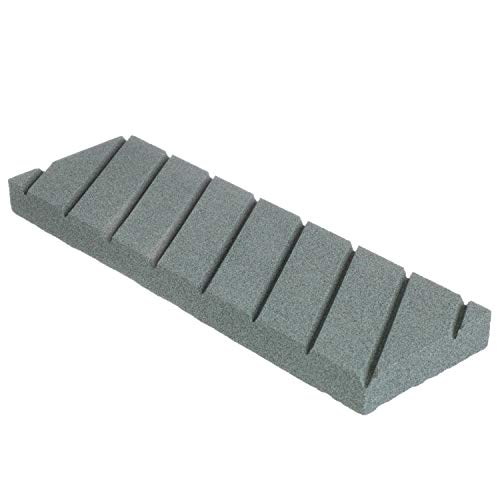
Norton’s flatstone is aimed squarely at waterstone care. The listed dimensions are 9 inches long, 3 inches wide, and three-quarters of an inch high, giving it a long working surface without moving into the broad footprint of a 10 x 4-inch lapping plate. Its coarse silicon carbide construction is intended to remove material from wet stones, and the diagonal grooves create channels for that material as the stones rub together.
The included stone holder and protective case are meaningful practical additions. A flattener is easy to leave beside a sink covered in abrasive residue, but a case gives it a defined storage place, while the holder can make the process easier to control. Norton describes the stone as suitable for all waterstone grits, although the coarse surface remains best viewed as a maintenance tool rather than a finishing abrasive for the sharpening stone itself.
Pros
- Long 9-inch format suits many standard waterstones.
- Coarse silicon carbide is intended for quick material removal.
- Diagonal grooves help clear removed stone material.
- Stone holder is included for more controlled handling.
- Protective case supports cleaner storage between uses.
Cons
- Only one coarse configuration is listed.
- The 3-inch width may provide less lateral coverage than a 4-inch plate.
Choose the Norton when storage and handling matter as much as the abrasive itself. It fits a traditional waterstone routine particularly well, especially for a buyer who wants the flattener, holder, and case together. A user who maintains both coarse and fine stones and wants to change aggressiveness will get more flexibility from the Sharp Pebble or POWERTEC models.
To buy this product, click here.
4. Naniwa Straightening Stone IO-1142 — Best Japanese 220-Grit Option

The Naniwa IO-1142 is a dedicated 220-grit straightening stone rather than a broad accessory kit. Its appeal lies in its focused specification. A buyer who already owns Japanese waterstones and wants a separate 220-grit maintenance stone may prefer this straightforward format over a large multi-purpose plate.
Available information identifies the product as a Naniwa 220-grit Japanese whetstone, but it does not provide dimensions, abrasive composition, holder details, or a multi-grit configuration. That makes it harder to compare directly with the larger flatteners in this guide. It also means buyers should confirm that the size and format suit their existing stones before purchase, particularly if their sharpening stones are unusually wide.
Pros
- Dedicated 220-grit straightening-stone design.
- Well suited to buyers maintaining a Japanese waterstone setup.
- Simple single-purpose format avoids unnecessary accessories.
- Moderate grit is appropriate for general flattening work.
- Compact product concept may suit focused sharpening stations.
Cons
- Available information does not list the stone’s dimensions.
- No second grit, holder, or case is identified in the supplied specifications.
The Naniwa is a sensible specialist choice for someone who already knows the size and maintenance requirements of the stones in their collection. It is less compelling as a first flattener for a beginner who needs broad compatibility information at a glance. Those buyers may find the dimensions and two-sided setup of the Sharp Pebble easier to evaluate.
To buy this product, click here.
5. POWERTEC Large Flattening Stone — Best Large Dual-Grit Design

POWERTEC’s 72124 model follows the same useful maintenance logic as other dual-grit flatteners but provides an 8 x 3-inch surface and a listed thickness of 1 3/16 inches. The 120-grit side is intended for aggressive correction, while the 320-grit side offers a less coarse option for smoothing or maintaining finer stones. That combination is practical when one sharpening station contains several waterstone grades.
Diamond-shaped grooves help move waste away from the contact area, and the product is described for whetstones, wet stones, waterstones, and oil stones. The broad 3-inch width can make it easier to cover a stone laterally than a narrow flattener. Since the product uses silicon carbide, it should be rinsed and dried as part of normal care, especially after wet flattening.
Pros
- 120/320 dual-grit arrangement supports different flattening tasks.
- 8 x 3-inch surface accommodates larger sharpening stones.
- Listed 1 3/16-inch thickness provides a substantial format.
- Grooved surface helps move slurry and debris away.
- Suitable for waterstones, wet stones, and oil stones.
Cons
- Thicker construction may be less convenient for compact storage.
- Silicon carbide does not provide the same abrasive category as a diamond plate.
POWERTEC is a strong alternative to the Sharp Pebble for buyers who value a wide working surface and a substantial body. Its specifications make it especially appealing for full-size stones that feel cramped under narrow flatteners. Pick the Sharp Pebble if its nearly 8-inch format and two-sided layout fit your storage better; pick POWERTEC if the extra width is the deciding detail.
To buy this product, click here.
6. Shun Leveling Stone — Best for Straightforward Routine Maintenance

The Shun Leveling Stone is built around a simple wet-use routine. The supplied instructions describe soaking both the sharpening stone and the leveling stone, then rubbing the ridged side across the uneven surface. Grooves are intended to collect removed material, which helps keep the contact area working as the stone is leveled.
Unlike the Sharp Pebble, POWERTEC, and Angerstone options, the supplied information does not identify a grit rating or dimensions for this model. That limits precise comparison for buyers who maintain stones of different sizes or want to match a flattener to a particular abrasive grade. Its straightforward leveling concept may still appeal to a Shun owner or someone looking for a dedicated branded accessory rather than a multi-grit plate.
Pros
- Purpose-built for leveling sharpening stones.
- Ridged surface is intended to remove material efficiently.
- Grooves help collect slurry and stone waste.
- Wet-use instructions are straightforward to follow.
- Simple design avoids a complicated sharpening setup.
Cons
- Grit and dimensions are not identified in the supplied information.
- No dual-grit configuration or holder is listed.
The Shun is best for buyers who prioritize a familiar branded leveling accessory and already understand the size of the stones they plan to maintain. It is less suitable for shoppers who need a detailed technical comparison before buying. If grit selection, surface area, or a stable base is central to your decision, the SHARPAL or Sharp Pebble provides clearer documented specifications.
To buy this product, click here.
7. Atoma Diamond Plate Knife Sharpening Flattening Whetstone #1200 — Best Fine Diamond Surface

The Atoma plate occupies a different place in the lineup because its listed 1200 grit is far finer than the coarse 120 to 220 options used for correcting significant hollows. Its dimensions are 10.6 x 4.3 inches with a listed height of 0.6 inch, giving it a broad surface for large sharpening stones. The supplied information identifies diamond as the abrasive type.
A fine plate can be relevant when a sharpener wants a less aggressive contact surface for finishing-oriented stone maintenance. It should not automatically be treated as the best tool for a deeply dished stone, where a coarse flattener generally removes material more quickly. The product’s large footprint also deserves attention because it may be more plate than a compact home sharpening area needs.
Pros
- Fine 1200-grit diamond surface suits finishing-oriented maintenance.
- Large 10.6 x 4.3-inch format covers broad stones.
- Diamond abrasive provides a distinct alternative to silicon carbide.
- Listed dimensions make compatibility easier to assess.
- Useful for buyers maintaining fine sharpening stones.
Cons
- 1200 grit may be slow for correcting a severely dished stone.
- Large plate size can require more storage space.
Atoma is the specialist pick for a buyer who understands why a fine flattening surface may be useful and already has a coarse solution for heavy correction. It is a poor substitute for a coarse flattener if a stone has a pronounced hollow. For a single-tool setup, the Sharp Pebble or POWERTEC offers a more adaptable range.
To buy this product, click here.
8. SCOTTCHEN Diamond Flattening Stone — Best Long Double-Sided Plate
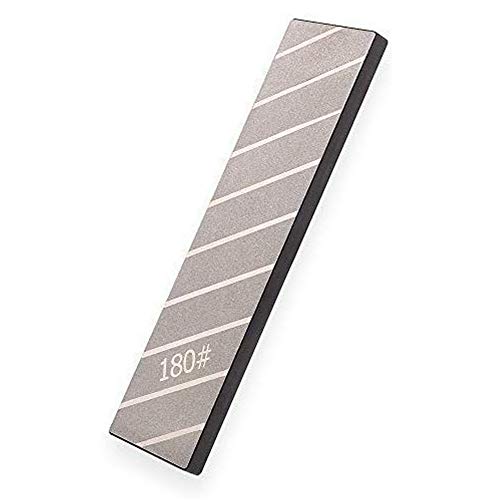
The SCOTTCHEN plate uses a long 10-inch format with two diamond surfaces, listed as 120 and 180 grit. That arrangement gives it a coarse side for faster removal and a somewhat finer side for a less aggressive pass. At 10 x 2 11/16 x 3/8 inches, it is long but narrower and thinner than the broad SHARPAL plate.
The product is listed for flattening whetstones, oilstones, and waterstones, and it can also be used for certain re-beveling tasks on tools such as hatchets, shears, and spades. That broader tool application may appeal to a workshop user, although it does not turn the plate into a general replacement for every sharpening abrasive. Wet use requires drying afterward to help prevent rust on the steel-backed plate.
Pros
- Long 10-inch format covers a substantial portion of a sharpening stone.
- Two diamond sides provide 120- and 180-grit choices.
- Suitable for whetstones, oilstones, and waterstones.
- Can serve selected re-beveling tasks on larger tools.
- Compact thickness is easy to store in a narrow space.
Cons
- Narrower width offers less lateral coverage than the SHARPAL plate.
- Wet use requires drying to help limit rust on the steel-backed construction.
This plate is a good fit for someone who wants a long diamond surface and occasionally maintains tools beyond kitchen knives. Its 120/180 pairing is useful for coarse work, but buyers seeking fine-stone maintenance will find the Atoma’s 1200 grit more relevant. The SCOTTCHEN makes the most sense in a mixed sharpening area where length and two coarse options matter.
To buy this product, click here.
9. Angerstone Dual-Grit Flattening Stone Set — Best Separate Two-Stage Set

Angerstone takes the two-grit idea and separates it into two pieces. The black stone is listed at 150 grit for initial leveling, while the white stone is listed at 320 grit for a subsequent smoothing pass and removal of loose filings. That arrangement can feel more straightforward than flipping a dual-sided block, especially when the two stones are left beside a sink as part of a regular maintenance routine.
The set is described for whetstones, oil stones, and ceramic stones, and the coarse silicon carbide surface is intended to remove material quickly. The product information does not provide the dimensions of each stone, so buyers with unusually large sharpening stones should verify fit before ordering. Its separate-piece format also means there are two items to rinse, dry, and store after use.
Pros
- Separate 150- and 320-grit stones support a two-stage process.
- Suitable for waterstones, oil stones, and ceramic stones.
- Coarse side is intended for correcting uneven surfaces.
- Fine stone can help smooth the flattened surface afterward.
- Separate pieces avoid turning one block over during maintenance.
Cons
- Dimensions are not identified in the supplied information.
- Two separate stones require more storage and cleanup than one block.
Angerstone is worth choosing when you specifically prefer separate coarse and fine tools. It can suit a household sharpening station where the two pieces will stay together in a tray or case. Buyers who want documented surface dimensions or a single compact tool should look first at the Sharp Pebble, while users seeking a precision diamond plate have better matches elsewhere in the ranking.
To buy this product, click here.
Buying Guide
Match the Abrasive to the Flattening Job
Grit determines how aggressively the flattener removes material. Coarse options such as 120, 150, 180, and 220 are useful for correcting a noticeable hollow. A 320-grit surface is gentler for a later pass or for maintaining finer stones. The Atoma’s listed 1200 grit occupies a much finer role, so it should not be selected simply because the number is higher. A high grit number does not automatically mean a better flattening stone.
Choose Between Silicon Carbide and Diamond
Silicon carbide appears throughout the dual-grit and traditional stone options in this guide. It offers a familiar stone-on-stone format and can be practical for routine waterstone care. Diamond plates provide a different abrasive construction and may appeal to users who prioritize a hard lapping surface. The available product information does not establish that one category will outlast every other option in every setup, so base the decision on the specific plate design, grit, flatness information, and intended use.
Check the Working Dimensions
A flattener should provide enough length and width to contact the sharpening stone without constant repositioning. The Sharp Pebble and POWERTEC offer approximately 8-inch formats, Norton lists a 9-inch length, and the SHARPAL, SCOTTCHEN, and Atoma options extend to roughly 10 inches or more. Width varies substantially. A long, narrow plate can work well lengthwise but may require more passes across a wide stone.
Look for Grooves or Channels
Flattening creates slurry and removes abrasive material from the sharpening stone. Grooves give that waste somewhere to collect, helping preserve contact between the two surfaces. Diamond patterns, diagonal channels, and ridged surfaces all serve a related purpose, although their exact behavior depends on the product construction. A completely smooth surface is not automatically unusable, but it may require more frequent rinsing during wet work.
Decide Whether You Want One Tool or Two
A dual-grit flattener keeps storage simple. Sharp Pebble and POWERTEC place two grit choices on one product, while Angerstone supplies separate stones. Separate pieces let you move directly from coarse correction to a finer pass without flipping a block, but they occupy more space and create two items to clean. A single-grit product such as Naniwa or the SHARPAL may be a better match if your stone collection follows one consistent maintenance routine.
Plan for Water, Slurry, and Drying
Many flattening routines take place at a sink with water added to the stones. The resulting slurry can be messy, so a towel and a clear rinsing area are useful practical additions. After wet work, rinse residue from the flattener and allow it to dry according to its construction. This is particularly relevant to steel-backed diamond plates such as the SCOTTCHEN, whose supplied information specifically calls for drying after wet grinding to help prevent rust.
Confirm Compatibility With Your Stones
Product descriptions identify many of these flatteners for waterstones, oil stones, or ceramic stones, but the available specifications are not equally detailed. The Naniwa and Shun listings provide less dimensional information than the Sharp Pebble, POWERTEC, SHARPAL, Norton, and SCOTTCHEN listings. Measure unusually wide or long sharpening stones before buying, and avoid assuming that a flattener’s grit is appropriate for every fine finishing stone in your collection.
Best Flattening Stone FAQ
What does a flattening stone do?
A flattening stone levels the worn surface of a sharpening stone. Repeated sharpening can create a hollow where the knife removes more material from the areas used most often. Rubbing the sharpening stone against a flattener removes material from the high areas until the working surface becomes level again.
Choose the flattening surface for the actual stone and follow its preparation limits. The guide to flattening a whetstone and checking the result explains contact and inspection.
How often should a sharpening stone be flattened?
There is no universal schedule because wear depends on the stone type, the amount of sharpening, and how concentrated the knife contact is. Check the surface periodically with a straightedge or another suitable reference. Flatten it when you can see or detect a hollow rather than waiting until sharpening becomes difficult.
Is a coarse flattening stone better than a fine one?
Coarse flatteners remove material faster and are useful for significant dishing. Fine flatteners are less aggressive and may suit a finishing pass or lighter maintenance. Neither is universally better. Many sharpening stations benefit from a coarse option for correction and a finer option for more controlled follow-up work.
Can a flattening stone be used on oil stones?
Several products in this guide are listed for oil stones, including the Sharp Pebble, POWERTEC, SCOTTCHEN, and Angerstone options. Check the product description and the stone manufacturer’s care instructions before combining abrasives or lubricants. Oil residue and water-based slurry should be managed separately to keep the working surfaces clean.
Can I use a flattening stone on a ceramic sharpening stone?
Some products are specifically described for ceramic stones, including the Sharp Pebble and Angerstone models. Ceramic stones vary in construction, so compatibility should be confirmed before use. Select the abrasive and grit with care, and avoid assuming that every flattener is suitable for every ceramic product.
Do diamond plates need grooves?
Grooves are useful because they provide space for slurry and removed material. A diamond plate without prominent grooves can still be designed for lapping, but it may require more frequent rinsing during use. The SHARPAL, Atoma, and SCOTTCHEN products illustrate that diamond flatteners can use different surface approaches and grit configurations.
Should a flattening stone be larger than the sharpening stone?
A larger flattener is not mandatory, but a generous working surface can make it easier to contact the sharpening stone evenly. Length and width both matter. A narrow plate may cover the center of a stone while requiring extra passes near the edges, whereas a broad plate can make the motion more consistent.
Can a flattening stone sharpen a kitchen knife?
A flattening stone is intended to maintain another sharpening stone, not to serve as the normal abrasive for sharpening a kitchen knife. Some diamond plates may be listed for additional tool work, but that does not make every flattening stone suitable for regular knife sharpening. Use an abrasive specifically intended for the blade and edge work involved.
Final Verdict
The Sharp Pebble Flattening Stone is the best overall choice for most kitchen sharpening stations. Its 120/320 dual-grit layout covers coarse correction and lighter maintenance, while the nearly 8-inch surface and slurry-clearing grooves make the format practical for ordinary waterstone care. POWERTEC is a close alternative for buyers who prefer a wider, substantial 8 x 3-inch body. Angerstone suits anyone who specifically wants separate coarse and fine pieces rather than a reversible block.
The SHARPAL 145H is the strongest specialized option for buyers who value a large diamond lapping plate, a rubber base, and a published flatness specification. Norton remains appealing for a traditional waterstone setup because its holder and case address storage and handling, while Atoma serves a narrower fine-maintenance role with its 1200-grit diamond surface. Match the flattener to the size, abrasive type, and condition of your sharpening stones, then rinse and dry the equipment carefully after each session.
